By Maxime Lu / 陆江
Published on DecanterChina.COM, Chinese version of Decanter.
4 February 2016
With Bordeaux gaining its protected geographic indication (GI) status in 2015, it is believed that the Chinese market, which has grown over 30% in wine import volume and value in 2015, is making progress in protecting the names of the most illustrious wine regions in the world.
Champagne, however, received its GI protection in China two years earlier. Being one of the first French wine regional bodies to set up an office in China, the CIVC shares its experiences in defending the name ‘Champagne’ in the country and promoting the concept among both trade and consumers.

Image: Wang Wei, representative of the Comité Champagne (CIVC) in China
What the GI does
A geographic indication (GI) is a ‘clearly defined, specific place of origin,’ explained Wang Wei, representative of the Comité Champagne’s China office.
‘The unique local geographic environment brings particular characteristics to its product, therefore only this area is granted the right to use a specific name. The concept came from Europe but is now used globally,’ she added.
Champagne gained its GI status in the early 20th century. It is one of the first wine producing regions to receive such recognition, introduced CIVC.
For an immature market like China, a GI is a helpful guide for consumers as it ‘suggests the style and features of the region, and provides some guarantee to the quality’, said Wang Wei.
‘When seeing the name “Champagne”, you will know that the wine has bubbles, and was made by fermenting in the bottle; also it suggests that the wine was made under strict regulations in grape selection, production and winemaking,’ said Wang Wei.
How to protect a European GI in China
Fresh import figures shows that in 2015, the total value of imported sparkling wines in China was 6m USD, down by 27% compared to 2014.
‘China has never been a major market for Champagne,’ confessed the China representative for the trade body, which set up its office in the country in 2006.
‘However, the Champanions decided that works need to be done to clean up the market environment and set up protections, before a market can really start to blossom for them.’
‘The Chinese market used to be flooded with “big champagnes”, “little champagnes”, “pink champagnes”—anyone could use the name. If we had allowed them spamming the market, consumers could never find out what real champagnes taste like. That’s bad news for any brand to develop naturally and positively in China.’
Among the French wine regions which hold a GI status, Champagne was the pioneer to set up an office in China. Through great efforts and spending a long time, the region was finally granted legal protection by the Chinese authorities in 2013, following Napa (2012).
‘Since then, we were able to take legal actions against the knock-offs,’ she explained.
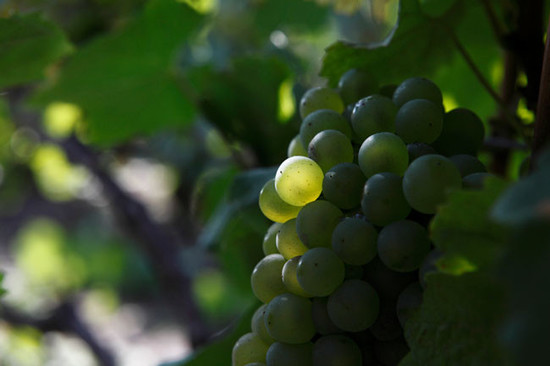
Image: Champagne vineyards © Decanter
For importers of regular sparkling wines who misused the Chinese name for Champagne ‘香槟’ on their labels, the CIVC China office would firstly ‘file a polite letter of notification, stating that this is an act of infringement, and demand them to stop using Champagne on the label. ’
‘Some of them would reply politely, saying that they were indeed unaware of the regulations, and were willing to make corrections,’ said Wang Wei, who considers this ‘a process you have to go through to gain understanding in the trade’. By doing this, ‘we hope to push for the trade to regulate itself,’ she added.
As for the cheap, low-quality knock-offs made by small local wineries, the trade body usually resort to the help of the local government, who can conduct investigations, confiscate the fakes, and urge offenders to stop the production.
Sometimes a fine is imposed. ‘Though the fine won’t be a lot, but it’s more like a statement: the term Champagne can’t be used lightly, and that the Champagne region is very serious about protecting its rights in China,’ said Wang Wei.
‘We are generally content about the progress we made in protecting the Champagne brand in the Chinese market at the moment.’
Promote the concept of geographic indication
Having said that, although the Chinese consumers are more and more conscious about protecting their rights and seeking for heathier and safer products, the geographic indication is still a concept ‘yet to be known by all’ in China, Wang Wei told DecanterChina.com.
‘Different local law enforcement departments don’t always understand the necessity of GI protection in the same way,’ said Wang Wei. ‘Sometimes we have to spend a very long time to explain and provide plenty of evidence, so as to help the local officials to understand what we’re asking for.’
In order to better communicate the concept of Champagne and the EU geographic protection system, ‘in 2015, we used every opportunity, including various government and trade seminars, to promote the idea of GI protection,’ said Wang Wei.
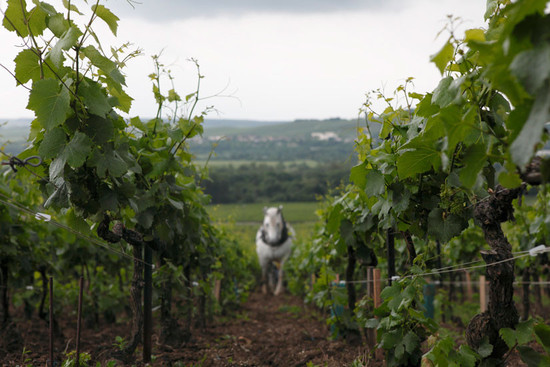
Image: Louis Roederer vineyards and horses, Champagne © Decanter
Educating consumers about Champagne is also an important part of the work, said Wang Wei.
‘There are many ways to spot a fake Champagne, such as via the certificate of origin or information on the wine label. But the consumers need some basic wine knowledge to do that.’
‘Everything we do today is for protecting the value of the ‘Champagne’ brand. The higher the value is the more efficient protection it needs.’
GI protection on China’s domestic products
As one of the pioneers in GI protection in China, the CIVC said that it’s happy to pass on the experiences to China’s domestic products.
‘China has many quality agricultural products that are made in a specific region and hold unique characteristics,’ Wang Wei told DecanterChina.com that due to lack of protection, many of these product or region names tend to be misused in the market. ‘Once the consumers get confused, the credibility of the name will be lost.’
In order to make the GI protection to take effect and bring actual profit to the local people, ‘the authorities need to pay enough attention to it. We will need a more comprehensive legal protection system, and train the law enforcers about the importance of intellectually property rights,’ suggested Wang Wei.
‘Properly reinforced GI protection will directly benefit both producers and consumers. It is also in line with the country’s strategy of sustainable development,’ she concluded.
Translated by Sylvia Wu / 吴嘉溦
All rights reserved by Time Inc. (UK) Ltd. No part of this publication may be reproduced, distributed or transmitted in any form or by any means without the prior written permission of Decanter. Only Official Media Partners (see ‘About Us’ page on the website) of DecanterChina.com may republish part of the content from the site without prior permission under strict Terms & Conditions. Contact china@decanter.com to learn about how to become an Official Media Partner of DecanterChina.com.