马云入手第三个波尔多酒庄,和赵薇共建葡萄酒帝国

文: 陆江(Maxime LU) | 葡萄酒在线

2006Äê4ÔÂ15ÈÕ£¬ÔÚ±±¾©²¢¹ºÂÛ̳Éϰ¢Àï°Í°Í¶­Ê¾ÖÊ×ϯִÐйÙÂíÔÆ»ñµÃ¡°2005ÖйúÊ®´ó²¢¹ºÈËÎ½±¡£2006Äê4ÔÂ15ÈÕ£¬ÔÚ±±¾©²¢¹ºÂÛ̳Éϰ¢Àï°Í°Í¶­Ê¾ÖÊ×ϯִÐйÙÂíÔÆ»ñµÃ¡°2005ÖйúÊ®´ó²¢¹ºÈËÎ½±¡£398694093

今年2月,马云买下了他的第一个波尔多产区的酒庄Chateau de Sours,位于波尔多的两海之间(Entre Deux Mers),80公顷,年产约50万瓶。

sours640

Chateau de Sours

上周宣布收购了第二家,位于波尔多Blaye Cotes de Bordeaux的酒庄 Chateau Perenne,64公顷,年产量约50万瓶。

perenneChateau Perenne

最新据英国每日邮报和法新社报道,中国亿万富豪马云花费1200万欧元买下了包括上周公布的Chateau Perenne酒庄在内,以及位于波尔多Cotes de Bourg的酒庄Chateau Guerry。这第三家波尔多酒庄Chateau Guerry,据称是Cotes de Bourg最古老的酒庄之一,约20公顷,年产8.4万瓶。这两座酒庄原来属于法国波尔多葡萄酒巨头伯纳德·马格雷兹(Bernard Magrez)。

25483-650x330-autre-chateau-guerry-cotes-de-bourg.Chateau Guerry

马云的酒庄收购步伐并未停止,据波尔多当地消息,马云下一步正在实施的还有对更高档酒庄的收购计划,尚未公布的目标酒庄包括昂贵的精品酒子产区Pomerol的酒庄。

马云,赵薇,史玉柱,李根雄(已入加拿大籍),四位商界大佬一起合作共享资源。由赵薇的酒庄团队为基础,成立的酒庄产业管理团队,集中负责打理四位名下的酒庄产业,未来还要拓展到美国加州,意大利,新西兰,澳大利亚等产区。

赵薇在波尔多自己收购的酒庄之一:Chateau Monlot,也成立了葡萄酒中间商企业(Negociant):SAS Cellar Privilege(联络地址与Monlot相同),主要负责四位庄主们旗下酒类产品的推广和销售工作。

EMMA1127-28-1024x682

同时Cellar Privilege还聘请新加坡的葡萄酒评论家庄布忠(Ch’ng Poh Tiong)作为顾问。庄布忠先生协助Cellar Privilege,为葡萄酒采购提供专业的意见,另一方面协助Cellar Privilege对中国的客户包括饭店、宾馆、和高级葡萄酒会所的工作人员进行葡萄酒专业培训。

现在赵薇在阿里巴巴的天猫旗舰店,获得马云的全力支持,赵薇的酒类生意也借此获得良好的现金流,进一步支撑赵薇的酒庄业务进入可持续发展的状态。

EMMA1127-29-1024x682

另外马云最近一年明显加强提升天猫的酒类业务部门,还大规模的宣传和举办葡萄酒节,除为了增加天猫淘宝的新增长点,同时也借此提升其葡萄酒产业链的完整性。

相信未来,这个以马云为首,通过以赵薇团队为运营核心的酒庄联合体,将会成为一个不容忽视的国际酒业力量


作者:陆江(Maxime LU)

– 曾为Decanter亚洲葡萄酒大赛(Decanter Asia Wine Awards),意大利南部葡萄酒大赛(Puglia)、葡萄牙葡萄酒挑战大赛-Wines of Portugal Challenge(Lisboa)等国际国内葡萄酒大赛专家评委;美食美酒旅游类撰稿人,《葡萄酒在线》专栏撰稿人、《Decanter中文版-醇鉴中国》撰稿人,葡萄酒行业咨询顾问,万欧兰葡萄酒教育首席讲师,资深葡萄酒收藏顾问。

An Updated Overview of the Chinese Wine Market (2015-2016)

Text: By Maxime Lu / 陆江

Published on ProwineChina.COM, Chinese version of PROWEIN.

In recent years, the Chinese wine market has witnessed dramatic changes, with transformative adjustments made in both major consumer groups and the sales model of wine merchants.

3093153859

The spending spree emerging in China in 2006-2007 culminated in early 2011 and then subsided. With the introduction of the policy for tightening spending on official overseas visits, official vehicles, and official hospitality in 2012, the country’s wine market rapidly entered the period of adjustment. Major consumer groups have changed from enterprises, institutions and government authorities to the public. Following the slump and stagnation in 2012-2014, the Chinese wine market bounced back in 2015.

Take imported wine as an example. In 2015, the volume of imported wine totaled 550 million liters, a 44.58% y-o-y increase, valued at US$ 2,039 million, a 34.30% y-o-y increase. Nonetheless, we should be cautiously optimistic about the high percentages. It should be reminded that the market was rather sluggish in the previous two years. Moreover, we should consider the following factors: replenishment following the clearing of stocks in the distribution area, purchase following the introduction of new capital, and of course market growth.

30154433294

Regarding origin countries of imported original wines in 2015, France ranked No.1. The volume of wines imported from the country totaled 167 million liters, an increase of 33.66%, valued at US$867 million, an increase of 41.25%. The average price was US$5.19/liter, increasing by 5.68% over the previous year. French wines accounted for 46.2% of China’s imported original wine market, still occupying a solid position. Australia ranked No.2. Thanks to lowered tariffs, the volume of wines imported from the country surged by 56.54%, with the import value soaring by 77.80%. Australian wines accounted for 23.4% of China’s imported original wine market. Chile gained a market share of 9.1%, ranking the third place in the list. Countries ranking No.4 to No. 10 are Spain, Italy, the United States, South Africa, Argentina, New Zealand and Germany.

With a market share of nearly 70% (in volume), domestic wines remained to be a leading player in the Chinese wine market in 2015. Changyu and GREAT WALL monopolized the domestic wine segment. Facing foreign competitors and increasingly mature consumers, leading domestic wineries doubled efforts to adjust the pricing system of their product lines, and further improved low price product lines with the highest sales volume in the mainstream market. In addition, these wineries purchased overseas wine chateaus and established cooperative relations with renowned international brands in a bid to enter the imported wine market, fully reflecting their ambition and vision for the future market. These wineries are expected to have more market moves in 2016. In another development, domestic wine markets in Beijing, Shanghai and Guangzhou were severely hit in 2015. In wine markets in a number of tier-3 and tier-4 cities, nevertheless, domestic wines with wide brand influence and strong market operational capability will maintain a leading role over a certain period of time in spite of mounting challenges.

It should be mentioned that, in recent years, quite a few fine wine chateaus were founded in wine regions such as Ningxia, Xinjiang, Shanxi and Huailai. Wines made there were well reputed in domestic and international markets. These fine wine chateaus have boosted local consumers’ confidence in domestic wines and increased their knowledge and understanding of domestic wine regions. More and more big importers began to act as an agent of domestic fine wines. Market feedback shows that more industry resources will be utilized to promote Chinese wines in 2016.

As for market expansion and sales activities, the entire industry continued exploration efforts.

30154420622

B to C platforms, such as JD and Amazon, gave more support to direct-selling categories and merchants trading on the platforms so as to increase the conversion rate. These platforms have always been focusing on individual consumers, so they were not hit by the policy for tightening spending on official overseas visits, official vehicles, and official hospitality. Instead, these platforms developed swiftly along with the growth of the consumer market. According to sources from JD, the company’s revenue of wines in 2015 tripled from that in 2014, and the figure in January 2016 quadrupled from the same period of last year. Since the beginning of 2016, these leading platforms have been planning to enhance market expansion in tier-2, tier-3 and tier-4 cities and towns. They are gradually becoming the core platform of the wine market.

Once a hotspot in the capital market, vertical e-businesses have suffered from mounting pressure in operation. In the past one or two years, some of these e-businesses were acquired or merged, some began to sell multiple categories, and others faded away. Currently, the O to O mode in the wine industry is increasingly becoming a highlight in the capital market. By leveraging capital and the O to O mode, some wine merchants, such as jiuxian.com, 9bianli.com and 1919.cn, have realized rapid expansion. But both suppliers and salespeople consider such a mode and expansion controversial. However, for several leading O to O wine merchants, they will experience rapid expansion in 2016, with both bubbles and opportunities.

Meanwhile, the B to B mode has also taken shape in China’s wine industry. More and more e-businesses dealing wines have adopted the mode, such as wajiu.com and jiuxian.com.

3093433829

As for long-established wine merchants, they have been exploring new business models while continuing to develop traditional channels including restaurants, shopping malls and supermarkets. For instance, Pudao, the Chinese subsidiary of Australian retail giant Woolworths, is exploring the mode of wine boutiques to provide private customers with cost-effective fine wines and professional wine service. ASC has closed its expensive clubs providing services for private customers. The company has been increasing investment into e-commerce, enhancing cooperation with other e-commerce platforms, and lowering its profit margin and product prices. Aussino World Wines, ASC and other wine merchants are launching wine education and cultural promotion campaigns to improve customer affinity. These traditional wine merchants will continue transformation in 2016.

Regarding the overall development of the Chinese wine market in 2016, representative wineries gave basically positive feedback. They expected an increase rate of 15%-30%. We are looking forward to the new year with modest growth.

Source link: http://prowinechina.com/channels/138.html

中国最新葡萄酒销售市场概况(2015-2016)

文:陆江(Maxime LU)

(本文已发表于Prowine China,转载请标明出处和署名)

中国的葡萄酒市场,最近几年一直是处在大幅变动中,无论市场主要消费受众还是酒商销售模式都在发生变革性的调整。

30154433294

2006-2007年开始在中国逐渐兴起的这一轮葡萄酒消费风潮,到2011年初到达高潮开始有所减缓,而到了2012年的三公限制政策的推出,直接快速地使市场步入调整期。中国的葡萄酒市场迅速地从集团消费和对公消费等主力市场,转换成面向大众为主的个人消费市场。历经2012-2014年的市场大幅下跌和探底,2015年中国的葡萄酒市场则开始初露曙光。

以进口葡萄酒为例,2015年进口量为5.55亿升,数量同比增长44.58%;进口额为20.39亿美金,金额同比增长34.30%。但是这个增长比例要谨慎乐观,因为其中要考量到是前两年市场不景气,流通环节清库存后的补货,以及新资本进来后的进货,当然也包括市场增长部分。

3093153859

2015年原瓶进口葡萄酒的来源国,来自法国的葡萄酒排在首位,进口量1.67亿升,增长33.66%;进口额8.67亿美元,金额增长41.25%;均价为5.19美元/升,同比增加5.68%;法国酒占整个原瓶进口葡萄酒市场的46.2%,地位依旧稳固。第二位是有着降税利好的澳大利亚,进步很快,进口量增速达56.54%,进口额增速高达77.80%,约占原瓶进口葡萄酒市场的23.4%。第三位智利占市场份额的9.1%,第四到第十位的分别是西班牙,意大利,美国,南非,阿根廷,新西兰,德国。

国产葡萄酒在2015年仍然是中国葡萄酒市场的主导,占有近70%的市场份额(数量计),国产葡萄酒阵营是双寡头张裕和长城主导,在进口酒的竞争下,以及消费者的逐渐成熟,国产酒巨头们积极对产品线的定价体系进行调整,加强完善在主力市场销量最大的低价段的产品系列。还购买海外酒庄以及和国际知名品牌建立合作,直接介入进口酒市场,手笔不小,对未来市场的野心也不小,2016年相信他们会有更多市场动作。另外国产酒市场在北上广被冲击得相对明显,不过在广大三四线城市的葡萄酒市场,国产酒凭借强大的品牌积淀和市场运作能力,将继续在一定时期内保持着主导的市场地位,虽然面临的挑战也会逐渐增多。

需要特别提到的是,近年来在宁夏、新疆、山西和怀来等产区也崛起了不少精品葡萄酒庄,为国产葡萄酒在国内和国际市场上博得了不错的声誉。 这些精品酒庄开始带动了本土消费者对国产酒的品质信心,和对国内葡萄酒产区的认知和了解。越来越多的有实力的进口商也逐渐加入到代理国产精品葡萄酒的行列。从市场反馈的资讯来说,在2016年将会有更多行业资源投入到中国本土葡萄酒的推广中。

在市场拓展和销售方面,全行业都在继续探索推动中。

30154420622

B to C的平台商京东、亚马逊等都通过逐渐加大直营品类和完善对入驻商户的支持,来提升对平台大流量的转换率,他们因为一直是以个人消费客户为主,所以没有受到来自三公限制政策的负面影响,反而随着个人消费市场的增长得到快速发展。据京东相关负责人介绍,2015年京东葡萄酒业务收入达到2014年的3倍,2016年的一月份是去年同期收入的4倍。在2016年,这些大平台们纷纷在规划加强对二三四线城市乡镇的渗透,他们逐渐成为葡萄酒市场的核心平台。

原来资本市场热点的葡萄酒垂直电商模式在经营上压力越来越大,在过去的一两年内逐渐分化,被收购兼并,或是开始多品类经营,也有逐渐淡出视线。现在酒类行业O to O模式正成为资本市场追逐的焦点。部分酒商如酒仙网、酒便利、1919等通过资本的推动和O to O模式,实现规模的快速扩大。但这种模式和扩张在业内具有争议,无论来自于供货商还是销售领域的从业者,不过对于几家规模领先的O to O酒商来说,2016年会是继续急速扩张的一年,泡沫一定会有,机会也同时存在。

还有B to B模式也在中国的葡萄酒行业形成一定规模,有越来越多葡萄酒电商在介入这一领域,例如像挖酒网,酒仙网等。

3093433829

而老牌酒商则继续植根传统餐饮商超渠道外,也在努力进行探索和改变:如澳洲零售巨头Woolworths在华的子公司葡道在探索精品连锁零售门店(wine boutique)的模式,为私人客户提供高性价比的精品酒,以及专业葡萄酒服务;还有像ASC关闭原有为私人客户服务的高成本会所,加大电商方面的投入力度,以及加强和其它电商平台的合作,还主动调低利润率,降低产品价格;还有像富隆和ASC等通过葡萄酒教育和文化推广增加对客户的粘度等。2016年也会是这些传统酒商继续转型的一年。

对于2016年中国葡萄酒市场的整体发展,我们通过部分有代表性的葡萄酒企业的反馈来看,基本都认为是积极向好的,预计增幅在15%-30%之间。期待这温和增长的新的一年。


陆江(Maxime LU)

– 曾为Decanter亚洲葡萄酒大赛(Decanter Asia Wine Awards),意大利南部葡萄酒大赛(Puglia)、葡萄牙葡萄酒挑战大赛-Wines of Portugal Challenge(Lisboa)等国际国内葡萄酒大赛专家评委;美食美酒旅游类撰稿人,《葡萄酒在线》专栏撰稿人、《Decanter中文版-醇鉴中国》撰稿人,葡萄酒行业咨询顾问,万欧兰葡萄酒教育首席讲师,资深葡萄酒收藏顾问。

JD.com: preventing fake wines online

By Maxime Lu / 陆江   ( 21 April 2016)

Published on DecanterChina.COM, Chinese version of Decanter.

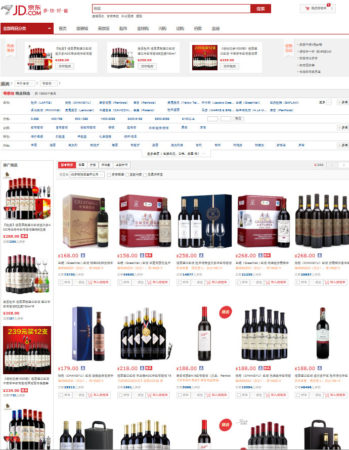
 JD.com, one of China’s biggest online retailers, spoke to DecanterChina.com about how they choose producers for their fast-growing wine sector and the efforts made in preventing fake wines.
jd


·Click here to read Part I of the interview on the scale and current state of JD.com’s growing wine business.

Direct import: choosing reputable suppliers

Among wines directly sold by JD.com, there are two types, said ZHAO Dabin, head of the wine department of JD.com. One type is wines bought directly by JD.com from overseas producers or their Chinese agent. ‘We always choose reputable suppliers in the business,’ said Zhao.

The other type is the big and famous wine brands owned by major companies and groups. ‘They have their own quality control system, so fake wines won’t be an issue.

’When working with agents, ‘we usually involve the producers as well to guarantee the authenticity of these products’, he said.

‘For any wine we choose, we’ll conduct internal tastings. This can, to some extend, assess the quality of these wines’, said Zhao Dabin.

‘Our reputation has always relied on importing authentic and reputable goods.’

Merchants: play by the rules

Unlike direct import brands, the online retailer has ‘relatively less control’ over registered merchants, said Zhao.

Instead, merchants need to sign ‘rigorous agreements’ with JD.com when they seek to start up a shop with the retailer. They also need to pay a deposit to the retailer as a guarantee of the quality.

Should any registered merchant sell fake wines, they need to pay ‘a minimum fine of 1m RMB or 10 times of the total sales of these fake wines, whichever is highest’.

To supervise the merchants, JD.com has a ‘dedicated quality-control department’, who would regularly examine random samples from the portfolios sold by merchants.

‘We also have a third-party institution who regularly visits our warehouses, as these warehouses temporarily store some merchants’ wines before shipment. They are responsible for sampling and examining the quality of these wines.’

A ‘consumer experience department’ was set up with the involvement of LIU Qiangdong, Managing Director of JD.com, who has a ‘personal interest in wine’, according to Zhao.

The department regularly purchases wines from JD.com, in order to test the quality of the wines like a consumer.

Choosing the right producers

In terms of choosing direct import brands, ‘we try to cover the most famous wine regions in the world, namely the top three or five producers of each region,’ said Zhao, adding that these wines need to be ‘value-for-money’.

JD.com also buys wines from domestic distributors with ‘less rigorous criteria’ than direct import, ‘but we would choose carefully’.

‘Because we have an enormous sales volume, we need the local distributors to give us a very competitive price,’ said Zhao.

When seeking for a producer in a certain region, ‘we would firstly try our connections in the wine circle, or ask local trade bodies to recommend producers for us,’ said Zhao. The online retailer also sends their buyers to trade fairs including Vinexpo and ProWein to choose wines at the scene.

For producers who directly get in touch with JD.com, the retailer would ask for samples to do a blind tasting first. ‘We may choose a few; then we will discuss with the producers about prices and how we can work together.’
134951_jd-com-zhao-dabin-liu-qiangdong-twe-signing-cropped

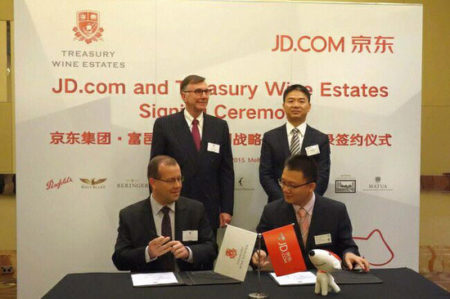
Image: ZHAO Dabin (right on the front) and LIU Qiangdong of JD.com signing agreement with Treasury Wine Estates·

Storage and logistics

How to store and deliver the wines has been one of the most difficult tasks for start-up online wine shops in China. Upon receiving investments, many online retailers have reported spending them on developing a storage and logistics system.

Delivery is not a major problem for a big-scale and mature online retailers such as JD.com, said Zhao Dabin.

Besides having their own express delivery network, ‘we package our wines in the same way as delicate electronic products such as mobile phones.’

As for storage, JD.com currently uses their food storage warehouse, some under normal temperature, some with constant temperature and humidity, to store their more affordable wines. ‘These are not professional wine cellars,’ admitted Zhao, ‘Considering we mainly store fast-selling wines in these warehouses, and it takes only a month for the wines to enter and leave the warehouse, the influence should be minimal.’

Fine wines, certainly, enjoy more professional storage environment, said the retailer.


Wine shopping tips on JD.com

Ask JD.com: I always find various sales deals and discounts vouchers for wines on JD.com. But why are these wines discounted?

Zhao Dabin: In most occasions these wines are slow sellers from our merchants, which is why they need to be pushed with discounts.

Also as we buy wines in big volume, we usually get very competitive prices, hence the discount.As for the vouchers, they are usually paid for by JD.com, with some help from our partners as well. Therefore, it’s very possible for people to find wines sold under the average market price on JD.com.

Translated by Sylvia Wu / 吴嘉溦
All rights reserved by Time Inc. (UK) Ltd.