Food and wine pairing in China: Technicalities ruin the fun

By  Maxime LU/ 陆江
7 February 2018

(Published on Decanter China, the Chinese version of Decanter)

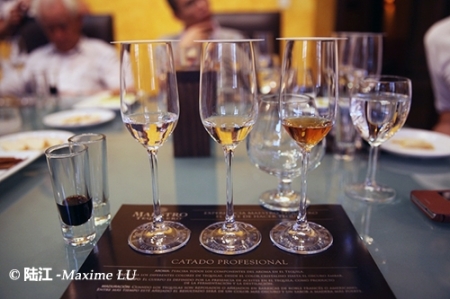
Food and wine pairing ‘helps but won’t drastically boost wine sales’ in China, despite the enormous number of wine and dine events being held in the country, said Chinese trade professionals

Distributors: Pairings don’t boost sales

There is no clear sign that the widespread media coverage and many events on food and wine pairing in China have directly helped wine sales, according to several importers and distributors.

‘Most of our customers drink wine for business occasions,’ said Christian Zhang, chief sommelier of Noah’s Yacht Club in Shanghai. ‘They still only have very basic knowledge about wine and pairing. The concept of wine pairing helps, but won’t make a huge difference in sales.’

At retail stores, ‘we are rarely asked about food pairing options by our customers,’ said YANG Zuyan, fine wine and projects manager of Pudao Wines.

‘To properly pair food with wine, you need a certain level of wine knowledge. While media and trade professionals are interested in the concept, their buying power is limited. Real consumers, however, don’t have [the] knowledge to be influenced by the concept,’ said Yang.

‘To make a sale, it’s key for us to demonstrate scenarios in which consumers can picture themselves drinking wine,’ said WANG Xiaoshan, Market Director of Joyvio, a wine importer owned by Legend Holdings, which also owns Lenovo.

‘If we start lecturing them on what wine they should choose if they’re going to eat a certain dish, things get too complicated and they won’t remember anyway,’ Wang said.

‘[Food and wine pairing] is additional information for consumers, and may help them to picture themselves enjoying the wine with food, but that’s about it,’ said Ma Tao, general manager of B2B wine distributer Wajiu.com.

‘For the general public, fine wine and dining is still considered as something enjoyed only by the white-collar elites, despite the heavy media coverage on the subject. In most cases, people still drink wines for quaffing and “Ganbei (bottoms up)” in China.’

Meanwhile, the concept of food and wine pairing as a branding and communication tool is considered important by producers and regional bodies, which stress that localised and less ‘textbook’ pairings tend to work better in China.
Producers: Non-textbook communication is the key

‘We wouldn’t rely on food and wine pairing events to push sales,’ said WU Xiaoxia, head of marketing in Changyu, the biggest wine producing company in China.

‘Culturally speaking, the majority of Chinese consumers care more about who they drink with and what the occasion is, so they pay less attention to what they drink. Plus, they usually have a variety of dishes laid out on the table at once, so the textbook course-based rules of Western wine pairing won’t work here,’ Wu said.

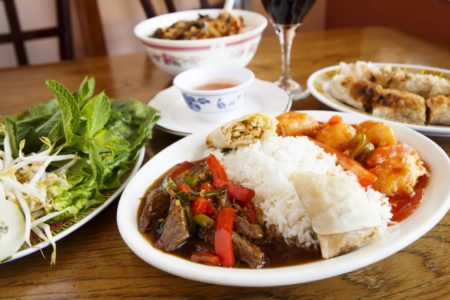
‘The key is to focus the pairing around Chinese food,’ said CHEN Lizhong, owner of Xinjiang-based boutique winery Tiansai.

‘We used the concept of Chinese food and wine pairing to promote our rosé, dry white and an easy-drinking red wine range, and we saw some growth in sales.’

The experimental and ‘fun’ elements of pairing are ideal to ‘bring Chinese consumers closer to wine’, especially during wine-themed dinners featuring local dishes, said YIN Kai, president of Castel China.

Food and wine pairing is an ‘important method’ for promoting Australian wines in China, agreed Willa Yang, Wine Australia’s head of market for China.

However, instead of teaching consumers about pairing roles, the regional body focuses more on helping Chinese consumers to ‘form the habit’ of having wines with food, Yang added.

‘Technicalities would ruin the fun and enjoyment of wine drinking,’ said Judy Chan, owner of Grace Vineyard.

‘However, when you start to recognise the basic principles of food and wine pairing, you will be better informed when choosing a bottle to buy, and naturally find more enjoyment in the pairing experiments.’
Food and wine: The ideal occasions

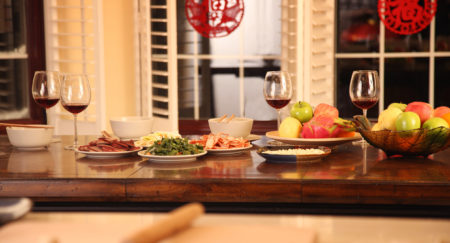
High-end restaurants that serve Western or Japanese food, as well as the more ‘westernised’ modern Chinese food restaurants, tend to naturally fit the concept or food and wine pairing, said professionals.

Fine wine and dining experiences are still important for promoting premium wines, said Ma Tao of Wajiu.com.

‘”Wine by the glass” and special pairing menus are welcomed by our customers,’ said Christian Zhang of Noah’s Yacht Club. ‘Wine region-themed promotions, such as ‘Rioja and restaurant week’, also help us to sell,’ he added.

Major events hosted in hotels, such as weddings, are also opportunities to promote wine via food pairings, said Wang Xiaoshan of Joyvio.

‘The guests tend to pay more attention to the choice of wine and food for the occasion, because they demonstrate the taste of the host.’


(Editing by Chris Mercer)

Translated by Sylvia Wu
An Updated Overview of the Chinese Wine Market (2015-2016)

Text: By Maxime Lu / 陆江

Published on ProwineChina.COM, Chinese version of PROWEIN.

In recent years, the Chinese wine market has witnessed dramatic changes, with transformative adjustments made in both major consumer groups and the sales model of wine merchants.

3093153859

The spending spree emerging in China in 2006-2007 culminated in early 2011 and then subsided. With the introduction of the policy for tightening spending on official overseas visits, official vehicles, and official hospitality in 2012, the country’s wine market rapidly entered the period of adjustment. Major consumer groups have changed from enterprises, institutions and government authorities to the public. Following the slump and stagnation in 2012-2014, the Chinese wine market bounced back in 2015.

Take imported wine as an example. In 2015, the volume of imported wine totaled 550 million liters, a 44.58% y-o-y increase, valued at US$ 2,039 million, a 34.30% y-o-y increase. Nonetheless, we should be cautiously optimistic about the high percentages. It should be reminded that the market was rather sluggish in the previous two years. Moreover, we should consider the following factors: replenishment following the clearing of stocks in the distribution area, purchase following the introduction of new capital, and of course market growth.

30154433294

Regarding origin countries of imported original wines in 2015, France ranked No.1. The volume of wines imported from the country totaled 167 million liters, an increase of 33.66%, valued at US$867 million, an increase of 41.25%. The average price was US$5.19/liter, increasing by 5.68% over the previous year. French wines accounted for 46.2% of China’s imported original wine market, still occupying a solid position. Australia ranked No.2. Thanks to lowered tariffs, the volume of wines imported from the country surged by 56.54%, with the import value soaring by 77.80%. Australian wines accounted for 23.4% of China’s imported original wine market. Chile gained a market share of 9.1%, ranking the third place in the list. Countries ranking No.4 to No. 10 are Spain, Italy, the United States, South Africa, Argentina, New Zealand and Germany.

With a market share of nearly 70% (in volume), domestic wines remained to be a leading player in the Chinese wine market in 2015. Changyu and GREAT WALL monopolized the domestic wine segment. Facing foreign competitors and increasingly mature consumers, leading domestic wineries doubled efforts to adjust the pricing system of their product lines, and further improved low price product lines with the highest sales volume in the mainstream market. In addition, these wineries purchased overseas wine chateaus and established cooperative relations with renowned international brands in a bid to enter the imported wine market, fully reflecting their ambition and vision for the future market. These wineries are expected to have more market moves in 2016. In another development, domestic wine markets in Beijing, Shanghai and Guangzhou were severely hit in 2015. In wine markets in a number of tier-3 and tier-4 cities, nevertheless, domestic wines with wide brand influence and strong market operational capability will maintain a leading role over a certain period of time in spite of mounting challenges.

It should be mentioned that, in recent years, quite a few fine wine chateaus were founded in wine regions such as Ningxia, Xinjiang, Shanxi and Huailai. Wines made there were well reputed in domestic and international markets. These fine wine chateaus have boosted local consumers’ confidence in domestic wines and increased their knowledge and understanding of domestic wine regions. More and more big importers began to act as an agent of domestic fine wines. Market feedback shows that more industry resources will be utilized to promote Chinese wines in 2016.

As for market expansion and sales activities, the entire industry continued exploration efforts.

30154420622

B to C platforms, such as JD and Amazon, gave more support to direct-selling categories and merchants trading on the platforms so as to increase the conversion rate. These platforms have always been focusing on individual consumers, so they were not hit by the policy for tightening spending on official overseas visits, official vehicles, and official hospitality. Instead, these platforms developed swiftly along with the growth of the consumer market. According to sources from JD, the company’s revenue of wines in 2015 tripled from that in 2014, and the figure in January 2016 quadrupled from the same period of last year. Since the beginning of 2016, these leading platforms have been planning to enhance market expansion in tier-2, tier-3 and tier-4 cities and towns. They are gradually becoming the core platform of the wine market.

Once a hotspot in the capital market, vertical e-businesses have suffered from mounting pressure in operation. In the past one or two years, some of these e-businesses were acquired or merged, some began to sell multiple categories, and others faded away. Currently, the O to O mode in the wine industry is increasingly becoming a highlight in the capital market. By leveraging capital and the O to O mode, some wine merchants, such as jiuxian.com, 9bianli.com and 1919.cn, have realized rapid expansion. But both suppliers and salespeople consider such a mode and expansion controversial. However, for several leading O to O wine merchants, they will experience rapid expansion in 2016, with both bubbles and opportunities.

Meanwhile, the B to B mode has also taken shape in China’s wine industry. More and more e-businesses dealing wines have adopted the mode, such as wajiu.com and jiuxian.com.

3093433829

As for long-established wine merchants, they have been exploring new business models while continuing to develop traditional channels including restaurants, shopping malls and supermarkets. For instance, Pudao, the Chinese subsidiary of Australian retail giant Woolworths, is exploring the mode of wine boutiques to provide private customers with cost-effective fine wines and professional wine service. ASC has closed its expensive clubs providing services for private customers. The company has been increasing investment into e-commerce, enhancing cooperation with other e-commerce platforms, and lowering its profit margin and product prices. Aussino World Wines, ASC and other wine merchants are launching wine education and cultural promotion campaigns to improve customer affinity. These traditional wine merchants will continue transformation in 2016.

Regarding the overall development of the Chinese wine market in 2016, representative wineries gave basically positive feedback. They expected an increase rate of 15%-30%. We are looking forward to the new year with modest growth.

Source link: http://prowinechina.com/channels/138.html

Wine Market and Education Promotion in China

Wine Market and Education Promotion in China

 – LU Jiang (Maxime) / WineOnline.CN –


Due to the great potential and rapid growth of China’s wine market, the past decade has witnessed the attention and participation from most wine producing countries worldwide. Much investment has flown into the market. However, in 2012 the Chinese government has adopted the policy of restricting three public consumptions (oversea trips, vehicles and banquets). Furthermore, sluggish economic growth and rash investment in the sector has made conducting business in China’s wine market a bleaker landscape more challenging. Wine imports have decreased by 4.46% (YOY) in 2013 and by 12.8% (YOY) in the first half of 2014.

Official and corporate consumption used to be the bulk of Chinese wine sales. Corporate purchases, gift-giving and dinners occupied the lion’s share of the market. By restricting three public consumptions combined with a stagnating economy, the relevant market share shrank dramatically. Individual consumption has become the focus of the market. The market changed unexpectedly and eventually experienced a hard landing. During the change, many dealers suffered greatly as they relied heavily on corporate or official consumption. Sales dropped remarkably and some dealers even retreated from the Chinese market. Nevertheless, the outlook for the industry is mixed. In short term, the drastic changes will unsettle dealers, but in the long run the industry’s hard landing and the value return will contribute to a healthy contraction and eventually higher quality standards of the Chinese wine industry.

14103856224

As for individual consumption and the market orientation for value return, some witty entrepreneurs have acted swiftly. Over the past year, they have flexibly readjusted the pricing and sales strategies to cater for personal consumption. On the other hand, they have improved marketing strategies and taken measures to explore the market against the bleak backdrop. They, in particular, have devoted much effort in education campaigns by cultivating regular customers and newcomers, creating demand and exploring new fields of consumption. Leading wine import businesses like ASC, Aussina World Wines, yesmywine.com and Vats Liquor have put much effort into capacity building in their education teams or marketing departments. They have initiatively cooperated with others to conduct standard systematic courses, different courses on wine regions and various master courses. Their efforts pay off in the promotion of enterprises and brands and customer development.

Although the wine market’s outlook seems to be grim in terms of imports and exports as a whole, the market is becoming more rational. The stockpile out of indiscriminate purchase is being consumed this year, as we can see from a lot of leftover stock or bargains. Actually, personal consumption has increased obviously, which can be seen by soaring e-commerce sales. On the other hand, the burgeoning growth of the wine education market manifests this trend. Master courses and courses on wine regions are on the rise. There are participants of wine systematic courses. Take WSET course from Britain as an example. After the past decade’s growth, especially for the last 2-3 years, their student numbers have increased rapidly. Nowadays, China is one of the largest providers for WSET students. Due to the strong demand, sites of lecturing are on the rise.

Meanwhile, oversea wine producers are trying to break bottleneck in an effort to pursue larger market shares in China. Among their efforts, official courses on winegrowing regions and master courses lectured by international wine masters are effective in practice. France and Australia, top sellers in the Chinese market, are two leading promoters for courses on wine regions.

France found its way into China in the late 1990s. As a pioneer of introducing courses  on wine growing regions, France has initiated accreditation of lecturers of the Bordeaux Wine School and introduced official courses in 2007. Professionals with industrial influence have turned to be official lecturers-promotion ambassadors. Dozens of those official lecturers are required to offer training programs of certain amount. In that way, they pass on their expertise on wine growing regions to industry players and wine fans across the country. This mode is copied by other wine growing regions. Australia’s A+ course of wine growing regions is the most successful one. Powered by more lecturers’ support and incentives, Australia’s A+ course of wine regions caught up with their Bordeaux counterpart within a short period of time, eventually even surpassing the latter. Australia’s efforts pay off in the market. Besides, wine growing regions or vineyards can offer master courses and organize tasting parties by influential exhibitions or cooperation with local education institutions. They can select particular approaches (like wine lecturers, the media and consumption opinion leaders) to yield favorable results, like the wine courses in the upcoming ProWine China.

14103926631

China’s wine market is currently in a turmoil. Nevertheless, there are signs of great potential and burgeoning growth. One of the major driving forces is wine education for consumers and industry players. Wine education will make the market more rational and healthier and will also offer more business opportunities.