A Brief Description of Development of Modern Chile Wine Regions

A Brief Description of  Development of Modern Chile Wine Regions

Text & Photo by Maxime LU

After diminishing for 10 years, China’s tariff on Chilean wines has finally been reduce to zero, Chilean wine thus once again become the focus of importers. It also has a special significance: in particular since CCP’s policy to clampdown in gifting to officials and ostentatious display of wealth in 2012; the global economic downturn; the repeatedly tightened country’s economic policy; transformation of the wine market and consumer consumption concept matures. All of these factors have shifted the market from its corporate and official consumption market, to a personal consumption-based market. With its high price-performance and diversity, Chilean wines naturally became more and more the choice of consumers.
chile11

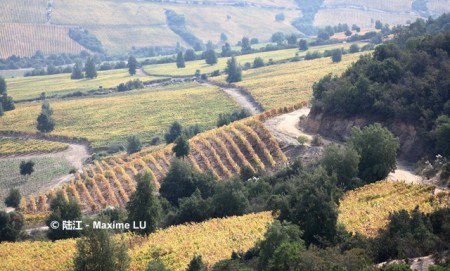
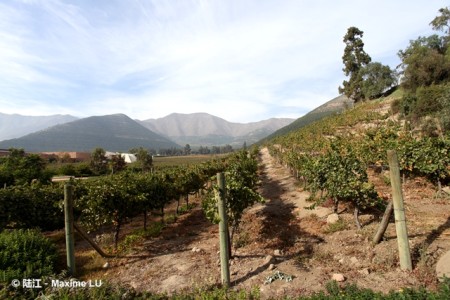
Apalta region/photo by Maxime LU

Chilean wine price-performance is usually the most mentioned advantages, which I will not repeat here, let’s focus on a keypoint of its diversity this time: the timeline of discovery of its wine regions, and its latest development in the “Wild Times” of last four decades. In the last century, due to political and other factors, the development of the Chilean wine industry was slow before 70s, the development of the modern wine industry was basically began in the late 70s, so the last four decades has been a period that represented the development and changes of modern Chilean appellations.
chile10

Let’s briefly introduce Chile and its wine regions here. Chile is a Panhandle land, to the west is the Pacific Ocean, with more than 4000 kilometers of coastline, stretching to the east is the towering Andes, to the south is the Antarctica ice sheet, to the north is the Atacama Desert, Chile is just over 100 km in width averagely and an earthquake-prone zone, which further contributes to its extremely complex and diverse land features, topography, soil types and micro-climate.
chile9
In 1979, the famous Spanish winemaker Miguel Torres (Miguel Torres) arrived Chile and started making wine in Curico valley. His arrival has since opened a new chapter in the Chilean wine industry, which is often considered to be the beginning of modern wine industry. He was the first who introduced the advanced temperature-control stainless steel fermentation tank, French oak barrels, and clones of few varietals, all of these have revolutionized development of both viticulture and wine-making technology of Chile.
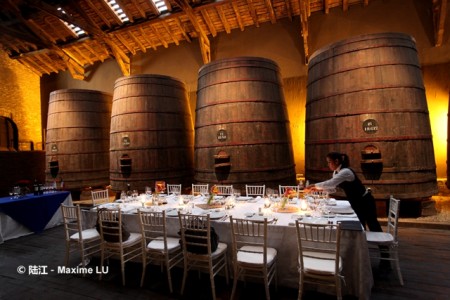
chile7

1980s – Started exploring the coastal area and began to develop vineyards at the Andes foothills areas. In 1982, Pablo Morandé opened vineyard in the cold and windy Casablanca Valley after visiting Los Carneros Region, California. (Los Carneros located at the junction of Napa and Sonoma ).
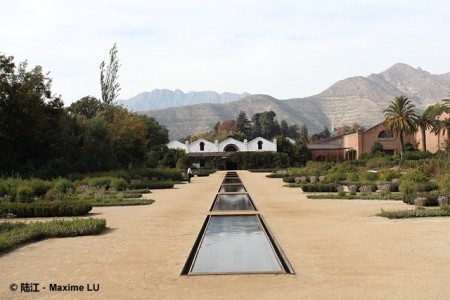
chile6

Then in the 1990s, Chilean gradually developed a new batch of excellent wine regions throughout the country:
1993 – Limari Valley
1993 – Bio Bio Valley
1995 – Malleco Valley
1997 – Elqui Valley
1998 – San Antonio Valley
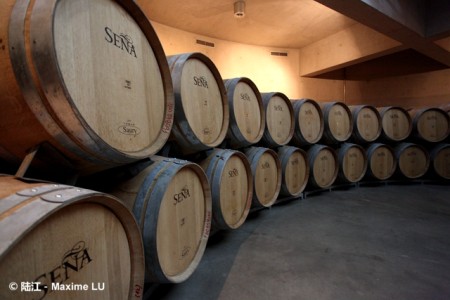
chile4
In 2007 Fundo Lechagua Winery started up a vineyard at Chiloe Island, more than 1100km south of Santiago. Vina Momberg located near the Lake Districct town of Osorno, started producing Pinot Noir and Sauvignon Blanc.
chile8
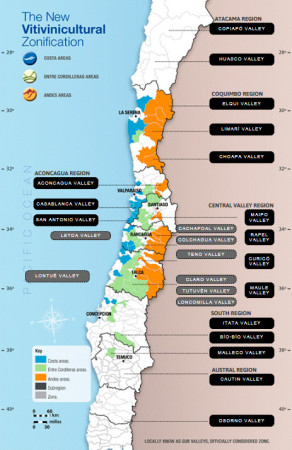
In 2012, to facilitate management, Chilean Agriculture and Livestock Service (SAG) has declared three official wine producing zone: the coastal area (Costa), the Andes area (Andes) and the between mountain ranges area (Entre Cordilleras), covering areas throughout Chile.

chile1

chile2

In 2013, Marcelo Papa, winemaker of Chile’s largest wine group Concha y Toro, mentioned during his interview with Decanter that Chile is constantly in search of suitable terroir to develop vineyard in the new viticultural area, making it one of the world’s most active wine producing countries.

Throughout the last few decades, although Chile has opened up quite a lot wine-producing areas and developed a number of regions with unique terroir, from its north to Copiapo Valley and Huasco Valley of Atacama Region, from it south to the Cautin Valley and Osorno Valley, but Chile still has great potential to be tapped. There are certainly a huge development space of the Chilean wine industry.

chile3

wine map of chile

法国香槟区在环保方面的措施和进展

图文:陆江(MaximeLU) 编辑:王智慧(SerienWANG)

法国香槟产区官方协会在中国市场上放出最多的消息,是香槟地理标示(GI)的保护、维权和市场数据。不过上个月正好法国香槟委员会新任主席VincentPerrin来华访问,在北京以专业著称的精品酒屋“葡道”,举办了一场关于香槟地区在环保方面的措施和进展状况的研讨会。我也应邀去参加了这场有一手资讯发布的研讨会。

a8ia10500806309781
Vincent Perrin先生在中国曾待了8年,3年在上海,5年在北京,太太也是中国人,Vincent Perrin先生的中文不错。是目前世界各葡萄酒产区协会中唯一会说中文的协会主席。

17088781

由于时间匆忙,记录了一部分Vincent Perrin先生说到的要点:

香槟委员会非常看重亚太市场,日本一直是重点,中国市场为日本市场的1/8,中国市场的重要性和未来的潜力对香槟区来说是极为重要的。

2015年底在巴黎有全球气候大会,香槟也要承担起社会责任,所以从2003年开始减少碳排放,至今已减少19%。而法国另一个著名产区波尔多则是刚刚开始实施减少碳排放。当然除此以外,其他产区在碳排放方面还没有听说有行动。

a6lq9t500823641781

另外Vincent Perrin先生也特别总结了香槟在环保方面已采取的四方面措施:

1.种植方面,控制化学物品的投入。尽量用自然的肥料,少用人工合成肥料,在过去5年减少了50%的化学物质投放。有专门体系监控监测土壤,预测天气,可以提前预防病虫害。

2.风土保持,生物多样性,景观保持。因为不少葡萄园在易水土流失的山坡地带,所以到今年已投入1亿欧元来减少水土流失和水污染。尽力保持生物多样化和自然的景象。

3.水,垃圾,副产品的管理。香槟也设定可持续发展的证书,是第三方来监控,法国农业部授权颁发,符合要求可以放在瓶身上。生产1瓶香槟仅产生2升废水。每年有120000吨的植物废弃物(包括皮渣梗),都在实施垃圾处理再利用。原来修剪下来的枝条通过烧枝处理,会产生二氧化碳和烟,现在在采用碾碎放入葡萄园的方法再利用。90%的瓶子可回收,只是透明那种还不行。

4.能源的节约。瓶子和包装优化,更轻,运载量减了8%。在2011年(运输和生产)减排7000吨二氧化碳。瓶子重量从900g减到835g。

Vincent Perrin先生最后提到目标:预计2020能减少到25%,2050减少75-80%的碳排放量。香槟区整体采用务实的理念,在保证品质的前提下,提升环保水准

五月最佳性价比品酒会-葡道澳洲顶级酒品鉴

图文 / 陆江     编辑 / 王智慧

提到本月(2015年5月)北京品酒会的性价比,我相信北京葡道(Pudao Wines)举办的这场面向公众爱好者的澳大利亚顶级葡萄酒品酒会,完全有资格荣膺最佳。

pd4

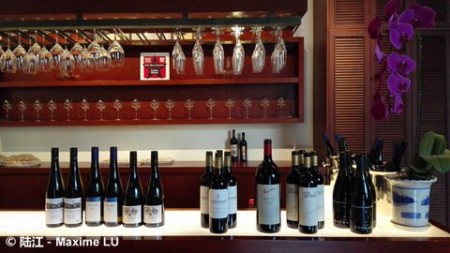
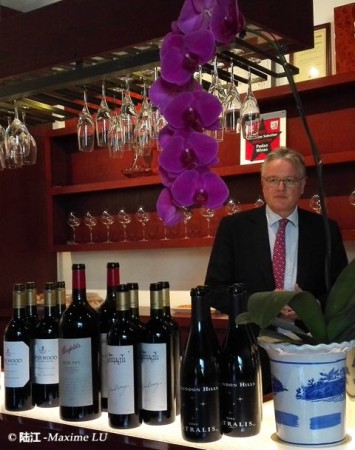
这场品酒会的酒款阵容豪华,都是来自于最新版-第六版澳洲最著名的精品酒(Fine Wine)排行榜-兰顿等级榜(简称兰顿榜)的最高级Exceptional的入列酒。作为澳洲零售业巨头WLG(Woolworth’s Lioquor Group)在华的全资分支酒类零售机构-葡道的这次手笔不小。6款酒每套酒(每种一瓶)的价格就在1万5千左右,而实收不到200元的品鉴费,是绝对的超值。当然葡道是有推广市场的因素,不过对于消费者来说是实打实的福利。

pd8


这次超值活动还吸引到不少北京业内的不同酒商和葡萄酒教育机构的专业人士自费来参加。葡道总经理Marcus也专程从上海过来站台支持。

pd5

pd7

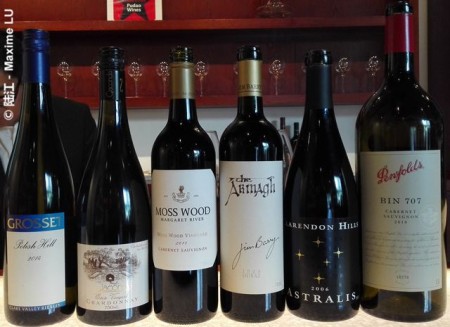
每一款都是来自于不同的生产商,都是颇具声誉的澳洲重量级精品酒:

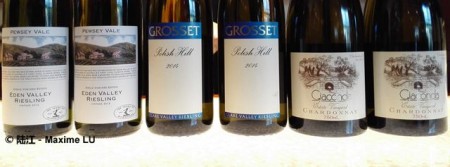
Grosset Polish hill Riesling是公认的白葡萄品种雷司令顶级生产商,以往试过数回,很喜欢他家风格,纯净又不失复杂度和集中度;

Giaconda Estate vineyard Chardonnay公认的澳洲白葡萄品种夏多内超一流作品,这一领域强手如林,我是第一次品鉴,竟有几分勃艮第夏多内顶级生产商Cochy dury的风格和实力;

Moss Wood Cabernet Sauvignon,西澳赫赫有名的精品酒生产商,赤霞珠(Cabernet Sauvignon)做得精致,又有很强陈年实力;

Penfolds(奔富)707也是澳洲顶级赤霞珠的代表之一,在中国知名度最高的澳洲顶级精品酒之一;

Jim Barry Clare valley the Armagh shiraz是饱满强劲型澳洲顶级西拉子的代表作品之一。Clarendon hills  Astralis  Syrah是饱满不失优雅的澳洲顶级西拉子的代表,具备举重若轻的超一流实力。


详细酒款表现可参见后附的酒评记录(记录者:独立酒评人,国际国内葡萄酒大赛评委陆江)。现场还有专程来访的兰顿榜的创立者,国际著名葡萄酒大师Andrew Caillard MW,他主持品鉴讲解现场的澳洲顶级酒和一些理念的分享。

pd1

Andrew Caillard MW / 陆江摄影

Andrew Caillard MW虽然是英国人,但却是公认的澳大利亚葡萄酒权威,而且他对中国葡萄酒产区也相当熟悉——他曾走访中国10年之久,拍摄了一部与特定时期中国葡萄酒市场,消费理念,中国国产酒相关的获奖纪录片“红色痴迷(Red Obsession)”。

前几天我在澳洲走访维多利亚州产区时,看到一些名庄的酒屋(Cellar Door)里摆着“兰顿(Langton)的等级表”, 后来和当地葡萄酒工作者交流时知道,在澳洲精品酒市场,尤其拍卖和收藏领域,兰顿榜有着主导的影响力。

pd3

陆江酒评词:

Grosset Polish Hill Riesling 2014
青柠,柑橘,白桃,油脂,中等酒体,酸度强劲贯穿,果味充沛,有一定集中度,口中有矿物感,有层次感,细腻,回味长。

Giaconda estate vineyard Chardonnay 2011
香气充沛,烤坚果,橘子,热带水果,香草,复杂,精致;中重酒体,酸度强,酒体和酸度整合不错,很平衡,集中,富有层次,香气丰富,回味长。实力强劲,有国际一线的勃艮第顶级夏朵内(Chardonnay)生产商Cochy Dury的风格。

Moss wood Cabernet Sauvignon 2011
黑莓,香料,黑醋栗,雪茄盒,精致气息,中重酒体,酸度中强活跃,单宁细致中强,平衡,回味长。

Penfolds(奔富) 707 Cabernet Sauvignon 2011
黑醋栗,香草,雪茄盒,香料,咖啡豆,细致均衡的香气,重酒体,单宁强细致耐嚼,酸度中强,平衡,回味长,咖啡豆。

Jim Barry Clare valley the Armagh 2008 Shiraz
太妃糖,咖啡豆,香料,奶油,还有明显桉树叶气息,重酒体,单宁中强,质地厚实,酸度中强,饱满庞大,回味长。

Clarendon hills  Astralis  Syrah  2006
皮革,动物,黑巧克力,果酱,雪茄盒,甜香料,奶油,咖啡豆,复杂,重酒体,饱满庞大,单宁强但优雅细致,均衡分布,层次丰富,回味长。

pd2

pd6

An Overview on New Zealand Winemaking Industry and the Chinese Wine Market

Photo & Text :Maxime LU

Source: ProWine China

In February, I was invited to visit most major wine regions in New Zealand. During the visit, I visited some chateaus with different styles and attended Regional Wines Tastings, which presented a complete picture of the southern-most wine producing country in the world. New Zealand wines feature consistent quality and reasonable price. They are lively, pure and full-bodied. They have clean aromas and distinctive characters. In particular, they boast of rich diversity, which is openly criticized by a lot of Chinese wine enthusiasts.

New Zealand stretches roughly 1,600 km from the North Island (36° S) to Central Otago (47° S), the world’s southern-most wine region. The country has a maritime climate, with all vineyards lying less than 130 km to the coast. Plenty of sunshine in the daytime and cool sea breeze at night result in big temperature difference in many wine regions, offering ideal production conditions for the growth of wine grapes. Being a coastal country, New Zealand rarely has extreme weather conditions. In addition, due to frequent crustal activities (numerous earthquakes and volcanoes), the change of river channels and human factors, New Zealand has complicated ground features and landforms, diverse soil constitutions as well as extremely different microclimates in different parcels. All these terroirs guarantee the diversity of local wines.

Another aspect worth noting is that grape planting in New Zealand originated in 1819, while the country’s winemaking industry hadn’t taken off until forty years ago, not being fettered by traditions. Rapid promotion of new technologies and constant innovation have been witnesses ever since. Meanwhile, local terroirs have been explored. Thanks to these efforts, the grape planting and winemaking techniques of the country’s winemaking industry have reached the world’s top level. The research on the microclimates and parcels in grape planting regions has reached a high level. As a result, the features of different parcels can be fully utilized. For instance, Pinot Noir grown in Wairarapa, Nelson, Marlborough, Canterbury/Waipara Valley and Central Otago all have unique regional characteristics.

In terms of area, Sauvignon Blanc and Pinot Noir are New Zealand’s leading varieties. In addition, there are quite a few aromatic varieties, such as Syrah, Merlot and Cabernet Sauvignon. Many winemaking practitioners are from other countries, where different grape varieties are planted. They are seeking for ideal vineyards to plant new varieties, such as Sangiovese, Malbec, Tempranilo, Albarino and Gruner Veltliner. New grape varieties with outstanding characteristics are planted. The diversification of grape varieties will be a trend of the country’s winemaking industry.

According to data of 2014, the overall plantings in New Zealand is 35,510 ha (1% higher than 2013), less than one-third of that of Bordeaux. The country produced 320 million liters of wine in that year, accounting for only 1% of the world’s total. New Zealand’s winemaking industry is small in scale. However, the unit price of wine ranks high among all wine producing countries. Therefore, the country pursues the strategy of offering wine with top quality. In New Zealand, 95% of chateaus are members of Sustainable Wine Growing New Zealand (SWNZ), and some of them even meet the standards of carbon neutrality.

New Zealand’s forward-looking winemaking industry strives to promote government legislation in a bid to enhance IPR protection and crack down on counterfeiting and infringement on local varietals. In April 2015, New Zealand Ministry of Economic Development and New Zealand Winegrowers jointly declared to establish the Geographical Indications (GI) system to protect the country’s internationally famed winemaking regions and varietals. It’s expected that the system will be established by the end of this year.

New Zealand winemaking industry entered the Chinese market in 2007. At that time, French wines dominated China’s imported wine market. In 2008, China and New Zealand signed the Free Trade Agreement, a turning point for the promotion of New Zealand wines in China. Soon, China rose to New Zealand’s biggest trading partner. According to the FTA between the two countries, zero tariffs will be imposed on New Zealand wines exported to China as from January 1, 2012, further cementing the confidence of New Zealand winemaking industry.

In market expansion, New Zealand winemaking industry is also pragmatic and ambitious. The growth rate of export value of wines is the highest of the country’s exported goods. In the end of 2014, wine ranked No.6 in the country’s exports.

With a small winemaking industry, New Zealand pursues the path of providing the finest varietal wines. Based on research and analysis on the Chinese wine market with huge potential, the country has worked out pragmatic and forward-looking promotional plans. Several years ago, New Zealand Trade and Enterprise and New Zealand Winegrowers jointly introduced the highly efficient Wine High Impact Programme. Under the programme, influential wine experts from New Zealand participated in various campaigns in the Chinese wine market to build the country’s image as a leading winemaker.

Selected measures in recent years:
– Launching a dedicated Chinese website to promote New Zealand wines;
– Organizing New Zealand wine trade fairs regularly, with workshops, symposiums and food & wine matching dinners;
– Organizing delegations to participate in the most influential local wine trade fairs, such as Prowine China;
– Organizing key opinion leaders (KOL) and experts in China’s winemaking industry for study tours in New Zealand’s winemaking regions, and establishing KIWI CLUB for networking to enable more consumers to gain a knowledge of New Zealand wines;
– Carrying out traditional and social media-based marketing campaigns, for instance, interacting with consumers and publishing information via Weibo (microblog) and WeChat;
– Offering educational programs for New Zealand winemaking practitioners, for instance, holding workshops in the country to help local wineries to gain a better understanding of the Chinese market, so as to work out effective development strategies and expansion plans.

Meanwhile, New Zealand winemaking industry often launches training programs on local wines. For instance, in April, top wine masters from the country offered New Zealand wine certification programs for professionals. In addition to tier-1 cities, such as Beijing, Shanghai and Guangzhou, training and certification systems are expected to cover tier-2 and tier 3 cities leading wine consumption.

Thanks to consistent efforts of New Zealand winemaking industry, the country’s wine exports to China rose from 268,000 liters (RMB 12.5 million in value) in 2007 to 1,920,000 liters (RMB 131 million in value) in 2014. In 2014, China became New Zealand’s sixth biggest destinations of wine exports, ranking after Australia, the U.S., the UK, Canada and the Netherlands.

Since the second half of 2012, the Chinese wine market has witnessed continued depression due to policy changes. In particular, the year 2014 is regarded as the most sluggish period. China’s total wine imports decreased by 5.7% compared with that of 2013. Nevertheless, wines imported from New Zealand rose by 34% in value and 11% in quantity during the same period. New Zealand wines have further expanded the share in China’s imported wine market. New Zealand winemaking industry has seen more potential in the Chinese market.

New Zealand winemaking industry has much confidence and expectations on the Chinese market. New Zealand Trade and Enterprise and New Zealand Winegrowers have jointly defined the goal towards the Chinese market in the next 5 years: The country’s wine exports to China will reach NZ$150 million by 2020. We are keen to see whether the goal will be realized.

– LU Jiang ( Maxime LU )