JD.com: preventing fake wines online

By Maxime Lu / 陆江   ( 21 April 2016)

Published on DecanterChina.COM, Chinese version of Decanter.

 JD.com, one of China’s biggest online retailers, spoke to DecanterChina.com about how they choose producers for their fast-growing wine sector and the efforts made in preventing fake wines.
jd


·Click here to read Part I of the interview on the scale and current state of JD.com’s growing wine business.

Direct import: choosing reputable suppliers

Among wines directly sold by JD.com, there are two types, said ZHAO Dabin, head of the wine department of JD.com. One type is wines bought directly by JD.com from overseas producers or their Chinese agent. ‘We always choose reputable suppliers in the business,’ said Zhao.

The other type is the big and famous wine brands owned by major companies and groups. ‘They have their own quality control system, so fake wines won’t be an issue.

’When working with agents, ‘we usually involve the producers as well to guarantee the authenticity of these products’, he said.

‘For any wine we choose, we’ll conduct internal tastings. This can, to some extend, assess the quality of these wines’, said Zhao Dabin.

‘Our reputation has always relied on importing authentic and reputable goods.’

Merchants: play by the rules

Unlike direct import brands, the online retailer has ‘relatively less control’ over registered merchants, said Zhao.

Instead, merchants need to sign ‘rigorous agreements’ with JD.com when they seek to start up a shop with the retailer. They also need to pay a deposit to the retailer as a guarantee of the quality.

Should any registered merchant sell fake wines, they need to pay ‘a minimum fine of 1m RMB or 10 times of the total sales of these fake wines, whichever is highest’.

To supervise the merchants, JD.com has a ‘dedicated quality-control department’, who would regularly examine random samples from the portfolios sold by merchants.

‘We also have a third-party institution who regularly visits our warehouses, as these warehouses temporarily store some merchants’ wines before shipment. They are responsible for sampling and examining the quality of these wines.’

A ‘consumer experience department’ was set up with the involvement of LIU Qiangdong, Managing Director of JD.com, who has a ‘personal interest in wine’, according to Zhao.

The department regularly purchases wines from JD.com, in order to test the quality of the wines like a consumer.

Choosing the right producers

In terms of choosing direct import brands, ‘we try to cover the most famous wine regions in the world, namely the top three or five producers of each region,’ said Zhao, adding that these wines need to be ‘value-for-money’.

JD.com also buys wines from domestic distributors with ‘less rigorous criteria’ than direct import, ‘but we would choose carefully’.

‘Because we have an enormous sales volume, we need the local distributors to give us a very competitive price,’ said Zhao.

When seeking for a producer in a certain region, ‘we would firstly try our connections in the wine circle, or ask local trade bodies to recommend producers for us,’ said Zhao. The online retailer also sends their buyers to trade fairs including Vinexpo and ProWein to choose wines at the scene.

For producers who directly get in touch with JD.com, the retailer would ask for samples to do a blind tasting first. ‘We may choose a few; then we will discuss with the producers about prices and how we can work together.’
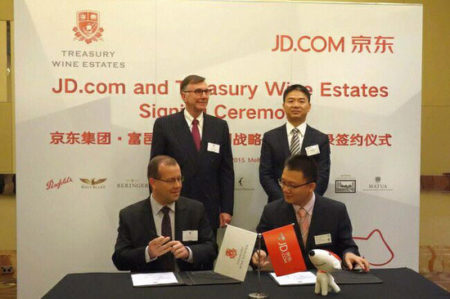
134951_jd-com-zhao-dabin-liu-qiangdong-twe-signing-cropped

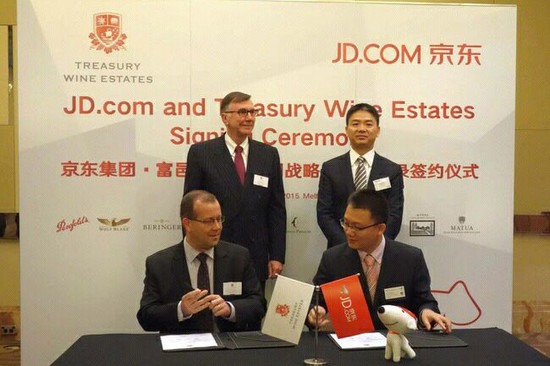
Image: ZHAO Dabin (right on the front) and LIU Qiangdong of JD.com signing agreement with Treasury Wine Estates·

Storage and logistics

How to store and deliver the wines has been one of the most difficult tasks for start-up online wine shops in China. Upon receiving investments, many online retailers have reported spending them on developing a storage and logistics system.

Delivery is not a major problem for a big-scale and mature online retailers such as JD.com, said Zhao Dabin.

Besides having their own express delivery network, ‘we package our wines in the same way as delicate electronic products such as mobile phones.’

As for storage, JD.com currently uses their food storage warehouse, some under normal temperature, some with constant temperature and humidity, to store their more affordable wines. ‘These are not professional wine cellars,’ admitted Zhao, ‘Considering we mainly store fast-selling wines in these warehouses, and it takes only a month for the wines to enter and leave the warehouse, the influence should be minimal.’

Fine wines, certainly, enjoy more professional storage environment, said the retailer.


Wine shopping tips on JD.com

Ask JD.com: I always find various sales deals and discounts vouchers for wines on JD.com. But why are these wines discounted?

Zhao Dabin: In most occasions these wines are slow sellers from our merchants, which is why they need to be pushed with discounts.

Also as we buy wines in big volume, we usually get very competitive prices, hence the discount.As for the vouchers, they are usually paid for by JD.com, with some help from our partners as well. Therefore, it’s very possible for people to find wines sold under the average market price on JD.com.

Translated by Sylvia Wu / 吴嘉溦
All rights reserved by Time Inc. (UK) Ltd.
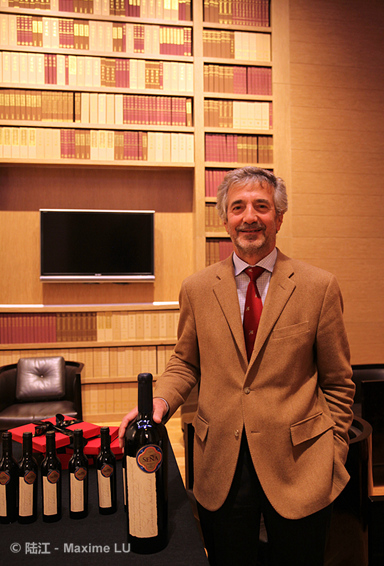


专访桑雅Sena庄主:如何打造顶级葡萄酒庄

图文:陆江 | 葡萄酒在线

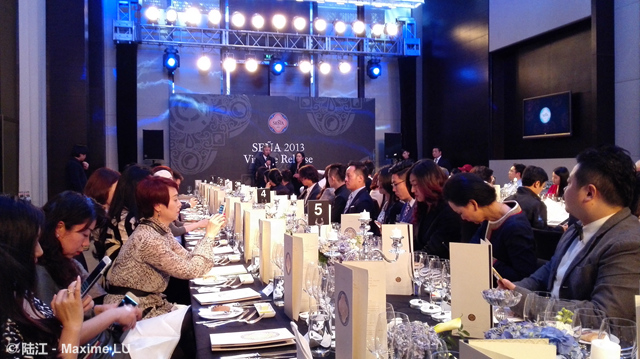
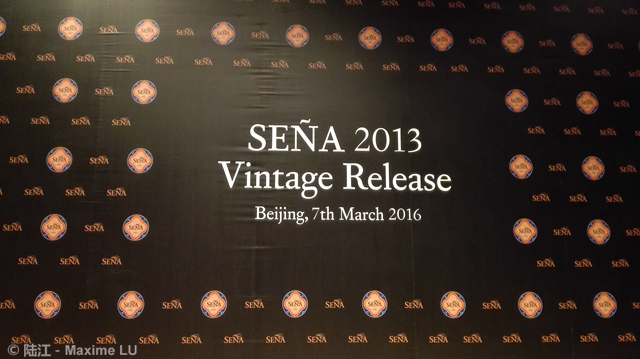
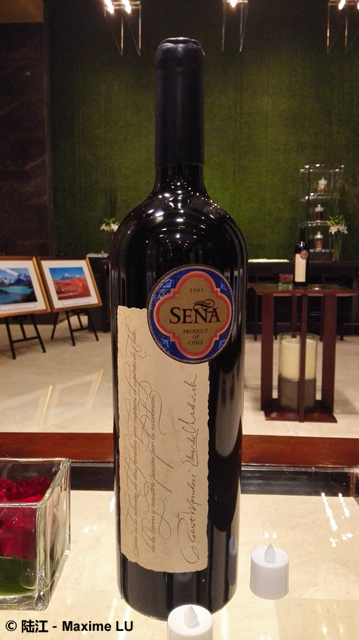
3月上旬,冬末夏初,智利顶级名庄Sena到中国来做2013年份的发布活动。酒庄庄主Eduardo Chadwick Errazuriz也来华主持发布活动。

我一直对他们酒庄的崛起过程,包括销售模式很感兴趣,因为Sena在中国市场表现不错,另外Sena他们的发展经历也可以让本土葡萄酒生产商,从中学习借鉴一下国际名庄的打造过程。正好我们《葡萄酒在线》和酒庄一直都有联络,于是就定下了采访约定。


IMG_7723_副本

2016年3月7日下午,北京柏悦酒店,因为仅有45分钟,我们直接就进入采访主题。

陆江:“先问一些常规信息,Sena的第一个年份是哪年?现在酿酒师是谁?平均年产量多少瓶?葡萄园面积多少公顷?葡萄园葡萄藤大概藤龄?种植密度?每公顷出产多少?是否生物动力、有机或其它?什么时候开始? ”

庄主Eduardo :“Sena的第一个年份是1995,现任酿酒师是Francisco Baettig,平均年产量60000瓶,葡萄园面积44公顷。葡萄藤龄,因为是从98,99年开始陆续种植,所以平均大概10年左右。种植密度5千到7千株每公顷,每公顷产量4吨左右,遵循生物动力理念,从2005开始的。”

IMG_20160307_195935

陆江:“Sena的创立得益于您和加州葡萄酒巨头罗伯特蒙大维(Robert Mondavi)的合作,后来罗伯特蒙大维去世后,你们还和他们有所合作吗?”

庄主Eduardo :“2004年罗伯特蒙大维去世,他的酒庄卖给了星座集团。而我们经营的理念是不想成为大集团的一部分,还是希望成为独立的酒庄,所以我们回购了股份,现在是100%家族拥有。后面也没有继续合作了。”

陆江:“您经常来中国?Sena在中国的市场状况如何? Sena的销售体系是什么样的?”

庄主Eduardo :“每年都会来香港和大陆3-4次。Sena在中国市场的数据连他也没有,因为我们并非直接在中国市场销售。 现在Sena是在法国波尔多发布和交易,像波尔多本地精品酒一般是在4月左右开始期酒销售,而Sena和其它诸如意大利名庄sassicaia等酒都是在9月开始销售。Sena出售的是2年前的年份酒,装瓶是在发布和交易那一年的1-2月开始装瓶,瓶陈6-7月后,到九月发售。如2014年份是今年(2016年)9月出售,是已装瓶的现货。当然这是第一次发布,一般是放出大约80%的总产量,剩余部分一般会有后续销售,酒庄自留和市场推广之用。”

IMG_20160307_194853

陆江:“在波尔多销售,也是采用配额制吗? 有哪些酒商在承销?”

庄主Eduardo :“是配额制,主要是CVBG,LD VINS,Diva,Joanne等中间商。”

陆江:“现在中国市场发展很快,Sena以后会来直接销售吗?”

庄主Eduardo :“从现在看,波尔多的销售体系还是很有效,我们只是个家族酒庄,主要精力放在酿酒上,让专业销售渠道去卖酒,这样会更适合我们。到目前为止还没有直接销售的想法,未来也许会。”

陆江:“我除了是《葡萄酒在线》的媒体工作外,也从事葡萄酒行业的咨询顾问工作。我们在分析葡萄酒商业案例时,也会把Sena等Errazuriz家族拥有的酒庄作为精品酒庄崛起的案例来分析,现在我很想了解您认为Errazuriz家族的酒庄们的崛起因素是哪些?”

庄主Eduardo :“首先是好的风土,著名的智利优质产区Aconcagua就是我们家族最先发现。”

然后Eduardo顺手翻开旁边一本关于他们酒庄的书《The Berlin Tasting》,向我展示里面内容。庄主Eduardo笑着说:“答案都在里面。”然后Eduardo还简单介绍了他的学习工作经历,工程专业毕业后,1983年他加入Errazuriz酒庄,然后他去波尔多学拜访《Le Gout Du Vin》的作者、已故的现代酿酒领域的泰斗Emile Penaud,向他学习经验,还认识了Paul Pontallier(注:玛歌酒庄总经理,2016年3月刚去世)等朋友。Eduardo还周游世界上不同产区,学习了解了现代的酿酒技术,然后回到智利,从此一直在家族的酒庄工作。

庄主Eduardo:“有好的风土,优秀的酿酒师,出产高品质的酒,还需要必要的市场推介。我们2004年做了柏林盲品,在和法国和意大利顶级酒的盲品中我们的酒获得前茅排名,后来10年内又在国际上主要葡萄酒市场的不同城市巡回模拟柏林盲品,结果90%以上的结果都是我们的葡萄酒位列前茅。接下来又拿10个年份做了垂直品鉴和展示,显示我们的酒的强大陈年实力。后期又拿我们的老年份酒和波尔多顶级庄老年份pk,结果也是获得很大成功。至此,我们认为已经无需再去做此类盲品比较,因为已经足够证明我们酒庄出品达到世界一流水准。接下来是向葡萄消费者推广我们的酒。所以品质还是基石,在此基础上做市场推广才是真实有效的。”

IMG_20160307_145107

陆江:“现阶段市场大概有哪些?”

庄主Eduardo:“中国,日本,瑞士,俄罗斯,欧洲,美国(原来曾是酒庄的第一市场,得益于和罗伯特蒙大维的合作),现在是通过波尔多销往全球市场。”

陆江:“您在推动智利葡萄酒发展方面主要做了哪些工作?”

庄主Eduardo:“全力推动20:20智利葡萄酒推广计划,塑造智利葡萄酒的品质形象,而不是单纯做低价低端酒。另外我也是智利葡萄酒协会(Wines of Chile)的主席。”

陆江:“不介意的话,能否给一些中国精品酒庄和产区一些发展建议?”

庄主Eduardo:“因为中国很新,他也没法给具体的建议,总之葡萄酒这是长期的工作,不能急功近利,品质是关键,我们走到现在已发展了35年,中国也一样,有很长的路要走,多尝试,有失败有成功,但一定要有自己的方向,要明白自己想要什么,明白后就去坚持实施。”

IMG_20160307_195956

采访者:陆江(Maxime LU)

– 曾为Decanter亚洲葡萄酒大赛(Decanter Asia Wine Awards),意大利南部葡萄酒大赛(Puglia)、葡萄牙葡萄酒挑战大赛-Wines of Portugal Challenge(Lisboa)等国际国内葡萄酒大赛专家评委;美食美酒旅游类撰稿人,《葡萄酒在线》专栏撰稿人、《Decanter中文版-醇鉴中国》专题撰稿人,《Prowine China》专栏撰稿人,葡萄酒行业咨询顾问,万欧兰葡萄酒教育首席讲师,资深葡萄酒收藏顾问。

意大利名庄皮欧跨越50年的垂直品鉴


  图文:陆江(Maxime LU)

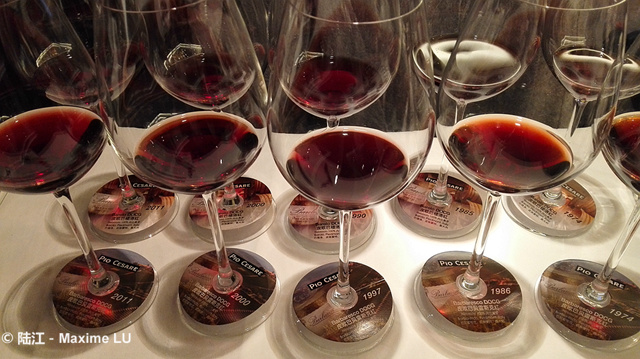
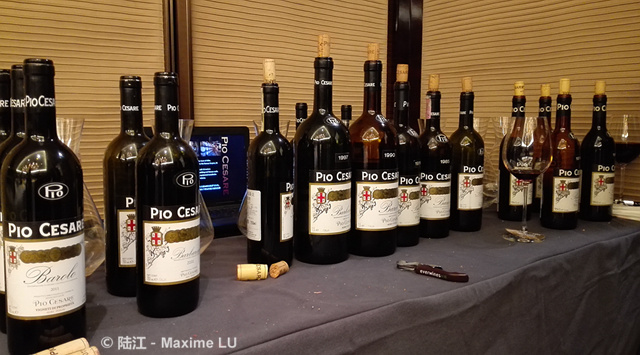
  2016年3月7日我应邀参加了桃乐丝中国(Torres China)在北京四季酒店举办的意大利皮埃蒙特(Piemonte)实力名庄皮欧酒庄(Pio Cesare)Barolo和Barbaresco跨越五十年的品鉴会。

IMG_7754_副本

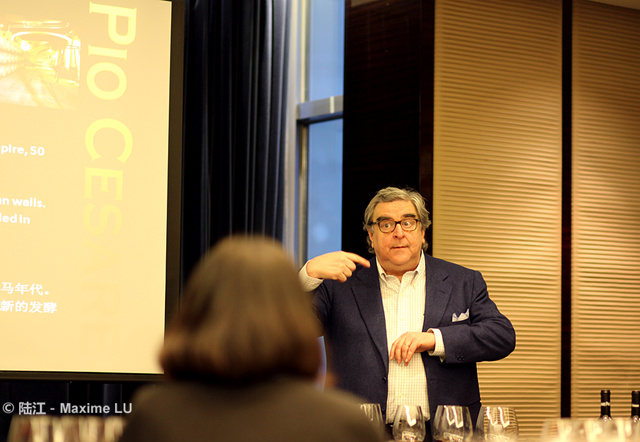
酒庄庄主Pio Boffa

  酒庄庄主Pio Boffa先生也正好在现场主持。他还特别提到,本来是只准备带新年份2011过来开品鉴会,不过和进口商桃乐丝沟通后,决定从酒庄拿出从70年代到最新年份的两种酒垂直年份共10款。原本号召力一般的新年份发布品酒会变为重量级的意大利名庄大跨度垂直年份品酒会,立刻号召力爆棚,品鉴当天来了不少北京葡萄酒媒体,葡萄酒培训专业人士和KOL,座无虚席。Pio Boffa先生还特别提到,为这些老酒,他去90多岁的老母亲那边软磨硬泡地要到酒窖的钥匙。

Pio Boffa先生还介绍了酒庄和品鉴的每款酒的相关年份情况。

IMG_20160307_163902_副本

皮欧酒庄由皮欧?凯撒创立于1881年,现在皮欧家族的五代传人依然选择在阿尔巴中心的古老酒窖中酿造传统的皮埃蒙特葡萄酒。酒窖的历史可以追溯到公元前50年的古罗马帝国时代,现在有大量的资金投入到修缮和巩固酒窖的架构及酒庄的设施。全新的发酵设备里新增依靠重力分离的设备,以及一个橡木桶陈年室。

同时,在现有的酒窖设施和古罗马城墙地下的12米处,建造了一个全新的罐瓶和贴标签的操作空间。皮欧酒庄拥有70逾公顷(150英亩)葡萄园。在巴楼洛地区,皮欧拥有的葡萄园有Ornate, Serralunga d’Alba的Colombaro,Gustava, Roncagile, Ravera;2014年11月,座落在Monforte d’Alba的Mosconi葡萄园也被购入。在Barbaresco地区,还拥有位于Treiso的Il Bricco和San Stefanetto葡萄园以及位于Diano d’Alba, Sinio和Trezzo村庄的一些葡萄。

IMG_20160307_174028_副本

我的一些酒评词 (By 陆江):

Pio Cesare Barolo DOCG 1974

沥青,一丝菜干,香料,蘑菇,中重酒体,单宁强,细致有力,咸,有一定集中度,酸度中强,活跃,回味长。平衡。

Pio Cesare Barbaresco DOCG 1974

果味,一丝菜干,饱满集中,香料,西梅果干,细致黑巧克力,重酒体,酸度中强,很好的平衡,单宁强,骨架清晰结实但细致,有结构感,回味长。

Pio Cesare Barolo DOCG 1985

酸梅干,果味清晰,香料,皮革,甘草,重酒体,酸度中强,单宁强,完整骨架,平衡扎实细致,集中度不错,依旧壮实,回味长,烟熏。很不错的陈年实力。

Pio Cesare Barbaresco DOCG 1986

皮革,咖啡豆,香料,重酒体,酸度中强,富有活力,单宁扎实细致,完整骨架,回味长。集中度比1985的略欠。

Pio Cesare Barolo DOCG 1990

还有一丝新鲜果味,山楂饴,香料,烟熏纸灰,重酒体,单宁厚实,很强劲,完整骨架,酸度中强,活跃,传统风格,平衡强壮有很好的陈年潜力。

Pio Cesare Barbaresco DOCG 1997

甜美果味,香料,皮革,单宁强劲,耐嚼,收敛有力,细致,饱满平衡,集中度很好,酸度中强,回味长。

Pio Cesare Barolo DOCG 2000

单宁强筋,重酒体,李子果味明显,黑巧克力,厚实饱满,单宁强劲天鹅绒,骨架完整壮实,酸度活跃,厚实,平衡,回味长。

Pio Cesare Barbaresco DOCG 2000

香料,果味清晰,黑巧克力,酸度中强活跃,单宁强劲柔滑,厚实天鹅绒,收敛有力,有些封闭,回味长。

Pio Cesare Barolo DOCG 2011

李子果味主导,香料,果干,黑巧克力,重酒体,单宁强劲,完整骨架,集中,比2000更细致,酸度中强活跃,平衡,回味长。

Pio Cesare Barbaresco DOCG 2011

果味充沛,有果味和果干气息,黑巧克力,香料气息,单宁强劲,厚实天鹅绒,重酒体,饱满集中,酸度中强,回味长。

IMG_20160307_172740_副本

JD.com: Mapping the landscape of online wine sales in China

By Maxime Lu / 陆江

Published on DecanterChina.COM, Chinese version of Decanter.

2 March 2016

In recent years, online retailers and their highly efficient delivery systems have largely changed people’s shopping habits in China. Such changes made online shopping one of the most important and fast-growing channels for Chinese consumers to purchase wine.

Read our exclusive interview with ZHAO Dabin, head of the wine department of Chinese online retail giant JD.com, to learn about the scale and current state of its rapidly growing wine business.

134951_jd-com-zhao-dabin-liu-qiangdong-twe-signing-croppedImage: ZHAO Dabin (right on the front) and LIU Qiangdong of JD.com signing agreement with Treasury Wine Estates

The scale of the business

As one of the biggest online retailers in China, JD.com launched its wine business at the end of 2010, ZHAO Dabin, head of JD.com’s wine department, told DecanterChina.com.

Wines sold on the site come from two sources, Zhao explained; JD.com works as an importer to buy wines from abroad and sell it directly, but it also serves as a ‘shopping mall’ for wine merchants to host their own shops.

The wine sales from both channels now account for a quarter of the retailer’s total annual sales of alcoholic beverages, which is expected to fetch CNY10.5bn (GBP1.1bn) in 2016.

‘Chinese white spirit (Baijiu),’ said Zhao, ‘still occupies the vast majority of the sales.’

In 2015, JD.com imported and sold CNY400m’s worth of wines itself, and the number is expected to triple in 2016. The sales through the merchants, on the other hand, are expected to hit CNY1.5bn, three times the amount of 2015, according to the retailer.

These estimates may still be ‘too conservative’, said Zhao, as JD.com has already sold 100m RMB’s worth of wine on its own from the start of 2016 to 20th January. ‘For January only, we have achieved four times the sales of last year.

Direct import vs merchants

Though JD’s direct wine import and sales business is growing rapidly, Zhao doesn’t believe that it would pose significant threat to merchants who sell their wines through JD.com.

‘Not all the wines are suitable to be sold by JD.com,’ explained Zhao.

For brands that are dealt by JD.com directly ‘they need to share a fixed amount of gross profit with us’, and their sales figures need to ‘keep up the pace’ of the fast-growing online retailer. JD.com would evaluate the performance of its own brands, and ‘eliminate’ the underperformers.

In fact, currently wine merchants take up a bigger chunk of the wine sales on JD.com, said Zhao. More and more merchants come organically or are invited by JD.com to build their own online stores. ‘The number of merchants defines the growths of the sales.’

The vast consumer base also suggests the size of the market. At the moment, wine consumers on JD.com are mainly office workers from Beijing, Shanghai and Guangdong, said Zhao. In late 2016, the retailer plans to reach out to villages and third and fourth tier cities.

‘Most of our wine consumers are still at entry level, though there are so many wine brands out there,’ said Zhao, pointing out that ‘only 3% to 4%’ among JD.com’s vast number of registered users buy wines at the moment. ‘There’re still plenty of room to grow.’

134952_jd-interview-decanter-2015-shanghai-fine-wine-encounter

Image: Chinese consumers at 2015 Decanter Shanghai Fine Wine Encounter

Domestic wines vs Imported wines

In 2015, China has imported significantly more bottled wines compared to 2014. The Free Trade Agreement signed between China and Australia is believed to pose more challenges to China’s domestic wine producers in the next few years.

Currently domestic wines account for 30% of JD.com’s self-run wine business, whereas imported wines take up 70%. Zhao believes that other major online retailers, such as Tmall.com and Yhd.com, rely ‘even less’ on domestic wines.

Among the merchants on JD.com, 15% of the brands they sell are domestic, although the sales volume of domestic wines is ‘slightly more’ than that of imported wines, said Zhao.

Though the growths of imported wines are constantly put under the spotlight, in the third or even fourth tier cities in China, domestic wines still dominate the market. ‘Imported wines still can’t break into the smaller cities,’ said Zhao, ‘although in the first and second tier cities, the sales of imported wines are almost equal to that of domestic wines.’

Facing such challenge, domestic producers are seeking to expand their business.

The two biggest wine producers in China, Changyu and Great Wall, ‘are still among the top three best-selling brands on JD.com,’ said Zhao, adding that the two brands alone take up over 90% of the sales of domestic wines on the platform.

134953_jd-interview-decanter-2015-shanghai-fine-wine-encounter-reading-bookletImage: Chinese wine lovers at 2015 Decanter Shanghai Fine Wine Encounter

The most popular price ranges

The top countries for imported wines on JD.com are led by France and followed by Australia, Chile, Spain, Italy and America. The most popular price ranges on the online retailer, according to Zhao, are ‘under 50RMB’ and ‘50-100RMB’.

The ‘under 50RMB’ tier is dominated by Spanish table wines. Among wines priced 50-100RMB, consumers can find entry-level wines from the Domaines Baron de Rothschild (Lafite) and branded wines such as those from Penfolds Rawson’s Retreat, Yellow Tail and Casillero del Diablo of Concha y Toro.

The range of ‘100-200RMB’, however, showed the most significant growth among JD.com’s self-run brands, said Zhao.

‘We work as an importer and retailer at the same time, so we won’t add too high margins. This is a very popular price range in the general market as well.’

JD.com is also keen to develop its fine wine portfolio, namely those priced at 200 to 500 RMB. The sales during 2015 and the Spring Festival period in 2016 showed the potential of these wines.

‘None of the online retailers would satisfy on selling only the entry-level wines. We need to go upstream.’

The effect of the austerity policy

‘The austerity policies have brought no negative effect to JD.com what-so-ever; if anything, it was beneficial to us,’ said Zhao.

‘The anti-corruption drive mainly tackled the mid-to-higher range products. JD.com, on the contrary, is a retailer targeting the mass consumers.’

The bubbles of the mid-to-higher range have now burst, bringing the price back to the reasonable range. ‘More and more people were looking for value-for-money wines, which was great news for us,’ said Zhao. ‘While overall the industry struggled to grow, we managed to triple our wine sales from 2014 to 2015.’

Choosing the right supplier

Now five years in the wine business, JD.com believe its biggest challenge comes from the supply chain.

The suppliers can’t necessarily foresee the scale of the sales, thus may struggle to prepare enough stock for the fast-growing retailer, said Zhao.

Facing such challenges, in 2016 JD.com intend to re-evaluate its 1300 wine products by regions, and to focus its resources on fewer but better brands and suppliers. However, the adjustment should not interfere with the growth, Zhao said, ‘we should be able to keep growing at the rate of 300% to 400% (per year).’

About 2016

Speaking about China’s wine market in 2016, ‘I don’t expect an explosive growth,’ said Zhao.‘We still don’t have enough wine consumers in China, which is why we need to encourage more consumers to start drinking wine. Meanwhile, we need to further control the distribution costs, and provide down-to-earth prices to consumers.’Coming next month:JD.com: Controlling the authenticity and quality of wine products

Translated by Sylvia Wu / 吴嘉溦

Source:    https://www.decanterchina.com/en/knowledge/people/importers/jd-com-mapping-the-landscape-of-online-wine-sales-in-china-part-i

All rights reserved by Time Inc. (UK) Ltd. No part of this publication may be reproduced, distributed or transmitted in any form or by any means without the prior written permission of Decanter. Only Official Media Partners (see ‘About Us’ page on the website) of DecanterChina.com may republish part of the content from the site without prior permission under strict Terms & Conditions. Contact china@decanter.com to learn about how to become an Official Media Partner of DecanterChina.com.