Group interview: Australian wines in China in the post-Free Trade era

By Maxime Lu / 陆江

What has changed for Australian wines in China since the two countries signed the Free Trade Agreements a year ago? Decanter spoke exclusively to Wine Australia, Chinese importers and wine experts to grasp the momentum.
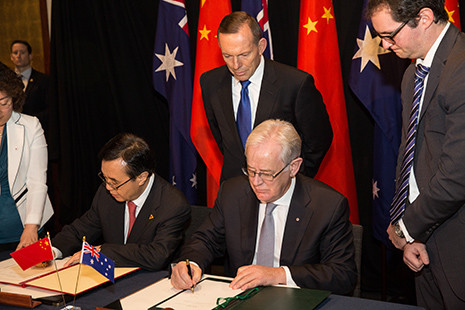
136740_chafta-china-australia-andrew-robb-gao-hucheng-tony-abbott-big
Image: Australian Trade and Investment Minister Andrew Robb and Chinese Commerce Minister Gao Hucheng signing the China-Australia Free Trade Agreement in Canberra on 17 June 2015, witnessed by Prime Minister Tony Abbott. Photo: DFAT/Andrew Taylor

The latest of tariff reduction

The latest tariff reduction after the China-Australia Free Trade Agreement came to effect on 1st January 2016.

The second stage of the tariff reduction mean that Australian wines now enjoy a tax rate of 8.4%, as oppose to the original 14%, when entering China, according to Explanatory Schedule of Chinese Tariff Commitments published by Australia’s Department of Foreign Affairs and Trade.

What has changed so far – Trade body

‘The change mainly lies in the way people see Australian wines,’ Willa Yang, head of trade body Wine Australia in China, told DecanterChina.com.

‘The Australian wineries and importers are much more confident for the market as their products are expected to become more competitive price-wise,’ said Yang.

During the 12 months until September 2016, the export value of Australian wines to China has increased 51% to reach 474 million AUD, while the export volume has increased 52% to hit 90 million litres, according to Wine Australia.

‘The increase is evident to the positive effect of the Free Trade Agreement,’ said Yang.
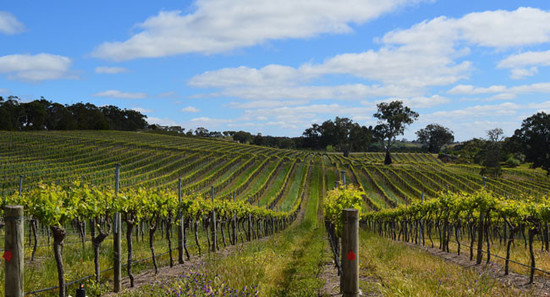
 

134626_eden-valley-vines-in-barossa-australia-chris-mercer-big
Image: Eden Valley, credit Chris Mercer

Importers

For the importers, the actual effect comes more gradually.

‘We are seeing more and more Australian wineries or brand owners coming to build their online shops, or joining big online wholesalers on Tmall International,’ said Huang Jing of the New Media Department of Alibaba, adding that they are currently working with supermarket and wholesaler groups including Woolworths and Metcash.

‘We saw great growths in sales of Australian wines,’ agreed Joanna Zheng, Senior Product Director of Amazon China.

‘It (Free Trade Agreement) is good news to the market in China but so far its impact on the cost is limited, consequently on the market overall,’ said Matthew Gong, spokesperson of ASC Fine Wines.

‘However, it will eventually give more competitive edge in pricing to Australian wines for their long term development in China.’

Although there’s no significant influence on sales yet, ‘we saw more attention and investment to the Chinese market from producers’, said Wang Xiaoshan, Market Director of Joyvio, wine importer and subsidiary of IT giant Legend Holdings, which also owns Lenovo.

‘The tariff reduction can eventually help merchants to reduce 20% of their costs,’ explained Marcus Ford, General Manager of Pudao Wines and Head of Wine Langton’s East Asia, ‘though it’s still far from the tax-free Hong Kong market.’

Therefore the benefit of the bilateral trade agreement is ‘mainly to attract more attention and investment to Australian Wines,’ said Ford.
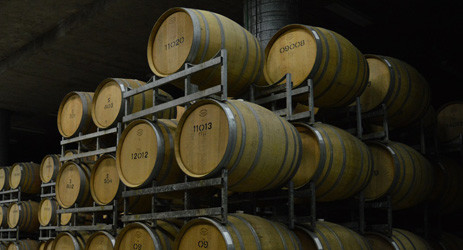
136741_australia-mornington-barrels
Image: Australian cellar, credit Chris Mercer

Consumers

For consumers, the reduced tariff has brought more ‘minor’ or ‘lesser known’ Australian wines to China, said Christian Zhang, head sommelier of Shanghai Yacht Club On The Bund.

‘Consumers have started to recognise Australian wine brands other than Penfolds. They have started to realise that Australian wines may be a more value-for-money choice than French wines.’

The challenges

The Free Trade Agreement has attracted many to set their feet into the wine industry ‘before getting fully prepared for it,’ warned Ford.

‘The most important thing is how you can get the wines sold,’ he added, ‘It’s not enough just shipping the wines over to China.’

‘For the top-end Australian wines, besides a few famous brands, the vast majority still need an enormous amount of marketing to make them known to consumers,’ said Gong.

The use of screw caps on the more expensive Australian wines is another challenge for consumers to make the decision to buy.

‘Although professional buyers would not mind screw caps, some consumers would still doubt the quality of the wine, especially when they need to pay a higher price for it,’ said Wang Xiaoshan.
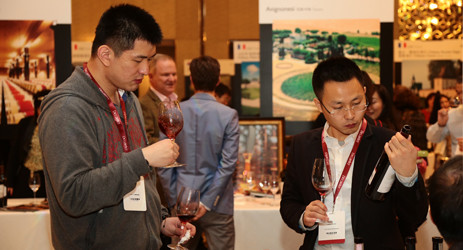
136742_australian-tasting-notes-chinese-translation
Image: Chinese wine lovers at Decanter Shanghai Fine Wine Encounter

The potential

While Chilean, Argentinian and Spanish wines are fighting for market share in the price bracket under 100 RMB (10 GBP), ‘in the price bracket between 150 to 200 RMB (15 to 20 GBP), you can already find many value-for-money Australian wines,’ said Marcus Ford.

‘This should become the mainstream for Australian wines,’ he said, adding that Australian wines are no longer synonym to ‘cheap wines’, and the top brands are responsible for raising the general image of Australian wines in China.

However, to ensure a long-term development of Australian wines, how to better tackle fake wines is crucial, said Christian Zhang.

‘For example, among the top Australian wines brought by consumers to our restaurant, half or even more can be fake,’ he said.

‘This is seriously damaging to the good name of the producers and their future in the Chinese market.’

In addition, Australian producers should consider adjusting their offering based on market preferences, said the sommelier.

Half-dry Riesling, for example, will be more welcomed by Chinese consumers than the widely available bone-dry style, he said.

As the next step, Wine Australia plans to ‘bring more events to second or third-tier cities in China’, said Willa Yang.

‘The mission is to make consumers feel less distant to (Autralian) wines, and make them feel that this is something they can enjoy casually.’

*This article is an abstract of the original interview.

Translated by Sylvia Wu / 吴嘉溦
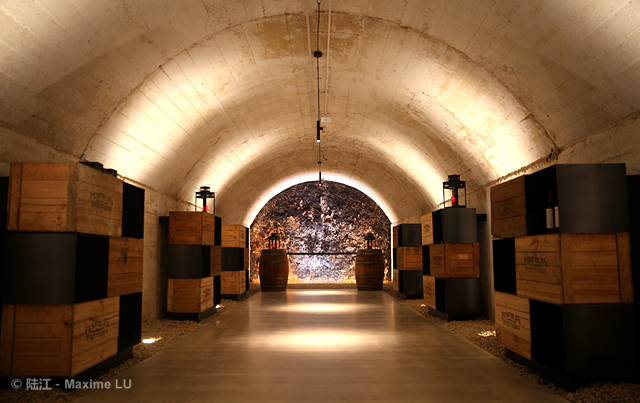
南澳葡萄酒之旅(上)-阿德莱德和库纳瓦拉


rp_IMG_3752_副本.jpg

图文:陆江(Maxime LU)

随着越来越多产区国的葡萄酒走进中国市场,消费者们开始逐渐将目光不仅仅盯在以法国葡萄酒为首的老牌旧世界葡萄酒阵营,越来越多的国人开始寻找葡萄酒世界的新大陆。美国、澳大利亚、智利等新世界葡萄酒国家逐渐被人们接受,而澳大利亚,无论从葡萄酒产量、品质、多样性,还是性价比等角度来看,都是世界葡萄酒版图举足轻重的产区国之一。

到去年2016年9月,澳大利亚葡萄酒在中国市场上,是第二大进口葡萄酒来源国,仅次于法国,同时中国市场也首次成为澳大利亚最大的葡萄酒海外市场。

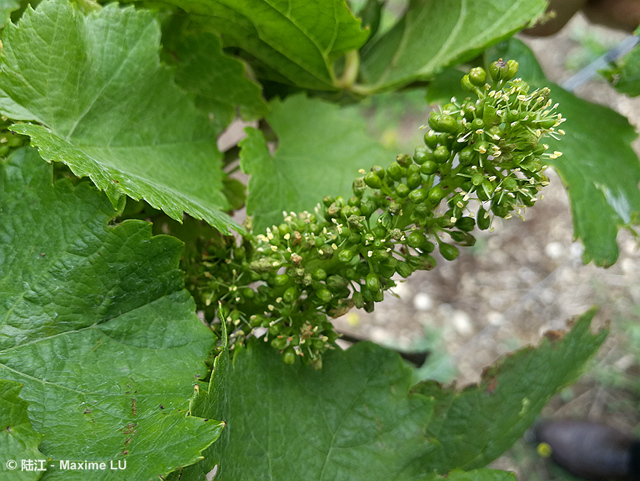
两个月前(2016年11月),正值澳洲的春末夏初,也是葡萄开花时节,我应邀走访了澳大利亚葡萄酒产区:南澳大利亚州,简称“南澳”。

IMG_20161119_193554_BURST002_副本

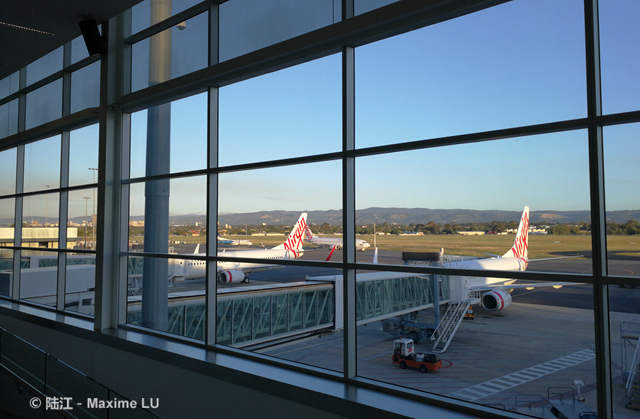
从北京出发经过11个半小时飞行我到达了墨尔本,中国二代护照可以电子自助出关,方便快捷。然后转机飞一个多小时,就到达南澳首府阿德莱德,比较搞怪的是阿德莱德和墨尔本有半小时时差。

时值初夏,阿德莱德气温20多度,白天最高能到30度左右,接机大叔说12月底或是1月,有时会到40多度,甚至持续一两周。不管如何,我(陆江)从雾霾降雪的北京穿着羽绒服,到了夏日T恤,反差得很愉快。

IMG_20161120_110819_副本

IMG_20161120_110936_副本


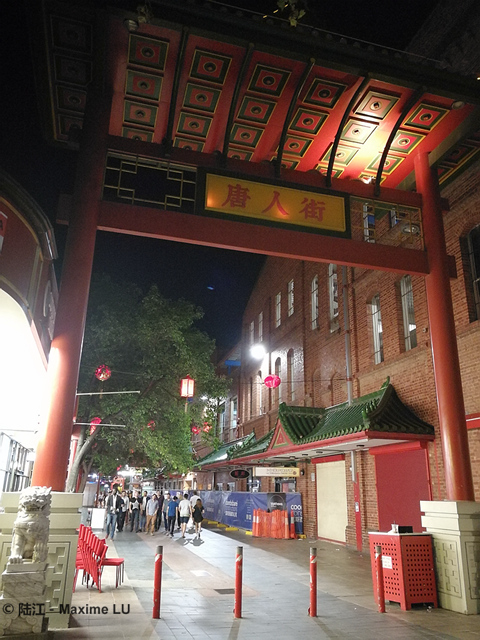
入住阿德莱德市中心的希尔顿酒店,旁边有我很喜欢的南半球最大的农贸市场之一的中央市场Central Market,可惜已经打烊,第二天又是周日休市,“完美”错过。不过建议来阿德莱德的爱吃喝的朋友,最好能抽时间逛逛,上次我收获不少。酒店边上还有唐人街,众多中餐馆子,满眼看去感觉比三里屯华人还多。


IMG_20161119_210200_副本


提到华人,有着不少国内葡萄酒专业学子留学阿德莱德大学,它虽在南澳,却是澳洲葡萄酒产业的重要发动机和人才基地之一,我在阿德莱德认识的朋友中就有不少阿德莱德大学的校友。这次带我吃当地粤式早茶的大雯子就是在阿大上学,还在美国纳帕、澳洲名庄工作过,现在常住阿德莱德。

马上开始要走访酒庄,首先简单普及一下:南澳是澳大利亚最重要的葡萄酒产区,整体基本属于凉爽至温暖的地中海型气候,适合出产高质量的葡萄,另外由于受海洋气候、海拔、以及劳富提山脉(Mount Lofty)等地物地貌因素影响,造就了南澳各子产区的复杂不同的风土条件,也造就了当地葡萄酒的风格多样性。这次我们会走访部分子产区:库纳瓦拉(Coonawarra),克莱尔谷(Clare Valley),巴洛萨谷Barossa Valley,伊顿谷(Eden Valley),阿德莱德山区(Adelaide hills)和麦克拉伦谷(McLaren Vale)。


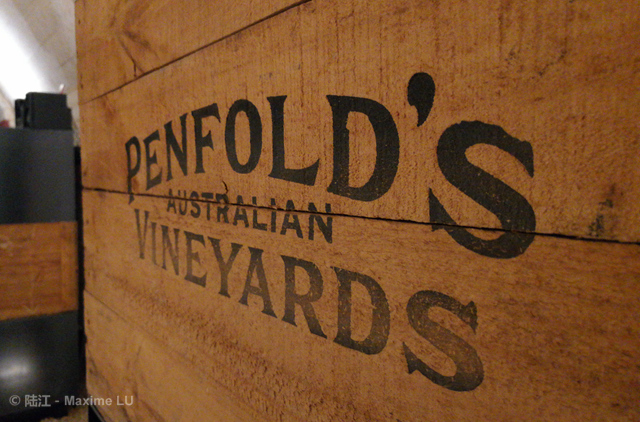
奔富(Penfolds)

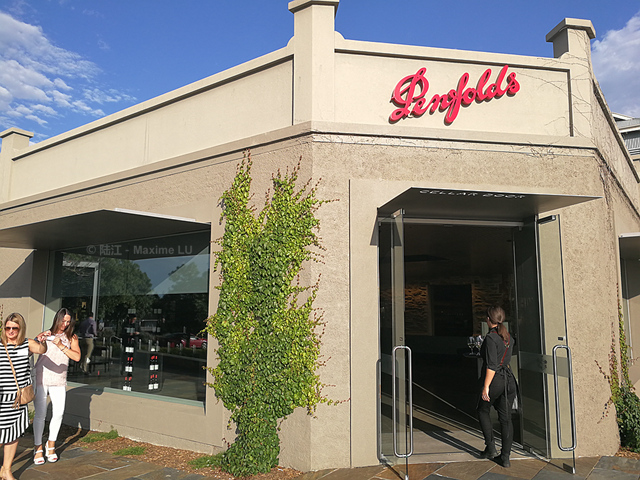
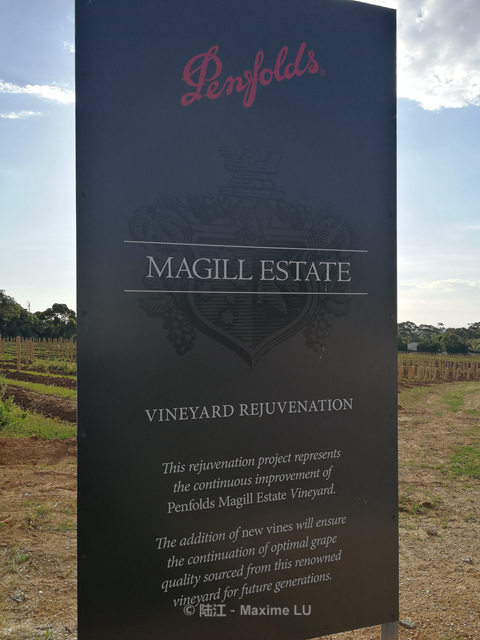
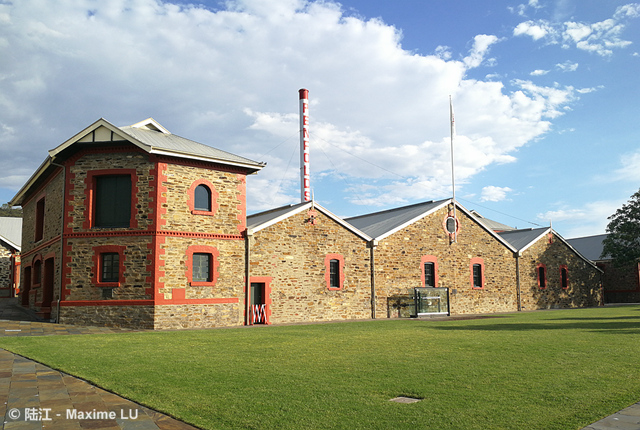
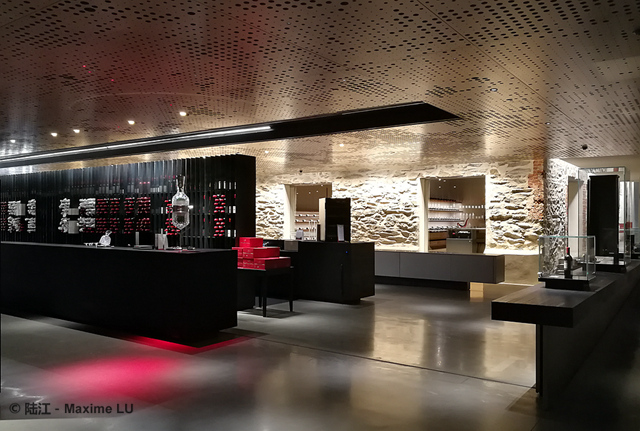
第一站在中国大陆市场澳洲葡萄酒绝对第一品牌的Penfolds,中文常被称为“奔富”。在阿德莱德附近的刚修建完的Penfolds的Magill酒庄接待中心,这里也是当年Penfolds医生开始种植葡萄的起源之地。特别提一下,Magill酒庄的西拉子,我试过几回,名副其实的高水准西拉子。

IMG_20161120_182039_副本_副本_副本_副本

IMG_20161120_181921_副本

IMG_20161120_182025_BURST001_COVER_副本

IMG_20161120_192300_BURST002_副本_副本

IMG_20161120_192748_副本

IMG_20161120_221953_副本

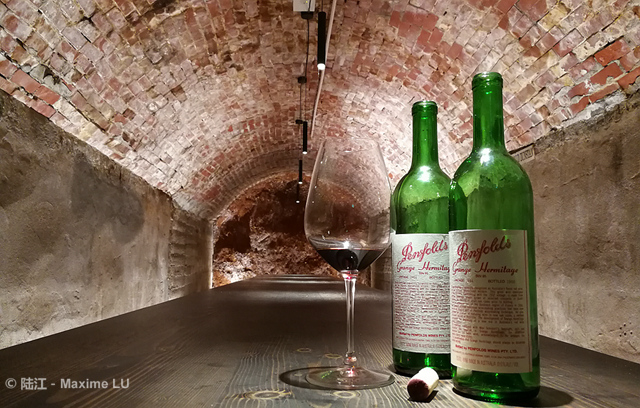
听了Penfolds的历史和企业介绍,感受了强大的财力和实力。品鉴必不可少,试了一款有明显陈年发展气息的酒,湿枯树叶,红果味,香料,皮革,入口有不错的集中度,有力的单宁,比较细致,整体平衡,还有不弱的陈年实力和深度,当时估计是Penfolds的高端品葛兰许(Grange),至少20年以上,不过看到酒标有点惊讶,酒是对的,可年份居然是1984,对比在国内试到的那些明显要老态多的80年代的葛兰许(Grange),当时就很感慨,买老酒还是在酒庄买比较靠谱。

IMG_20161120_193250_副本

IMG_20161120_191041_副本

IMG_3752_副本

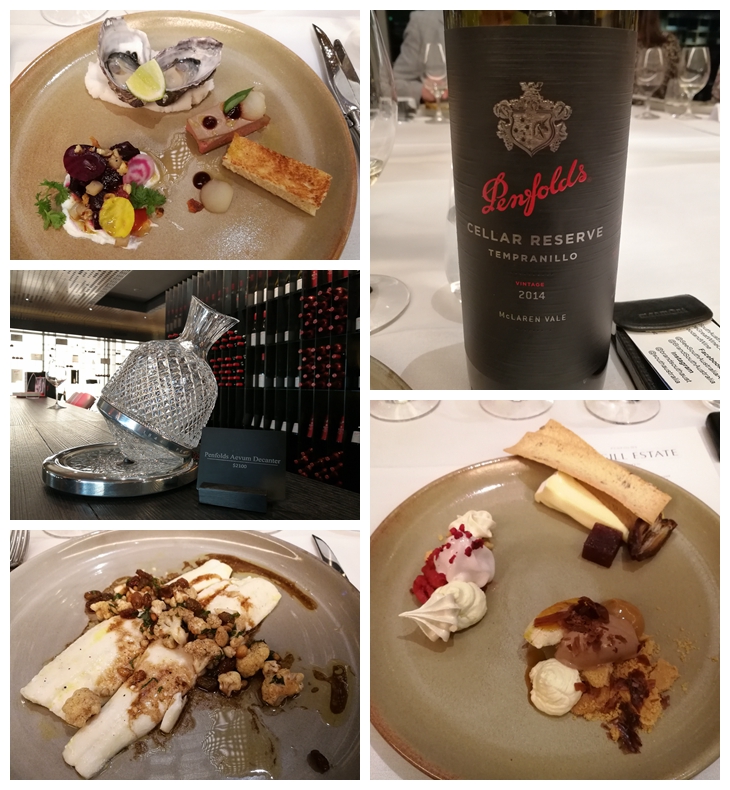
晚宴除了Penfolds的人员外,还有当地酒类协会、酒类相关领域的学者和南澳推介机构的职员,我用不那么流畅的英语,回答了不少关于中国葡萄酒市场的问题。席间还第一次试到Penfolds旗下用相对冷门的Tempranilo品种酿的Cellar Reserve Tempranilo 2014干红:黑色水果,香料,很厚实有力的单宁,饱满,余味长。微醺散席。


IMG_20161120_200158_副本

penfolds

库纳瓦拉(Coonawarra)


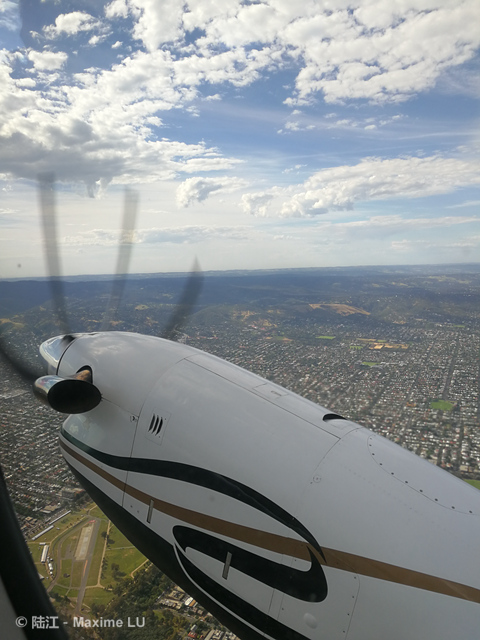
一早我和同伴们就到阿德莱德的商务飞机小机场,一小时就到达南澳的著名葡萄酒产区库纳瓦拉(Coonawarra),著名的红土之地,也是南澳最具盛名的赤霞珠品种产区。

Tips:为了提高时间利用率,南澳当地推广机构特别订了商务小飞机,基本四百公里内的子产区都在一小时航程内。我特意询问租用价格,10来座的商务小飞机,租用一天约五六千澳币,对行程紧的团队很合适。

IMG_20161121_083026_副本

IMG_20161121_132446_副本

IMG_20161121_084756_副本

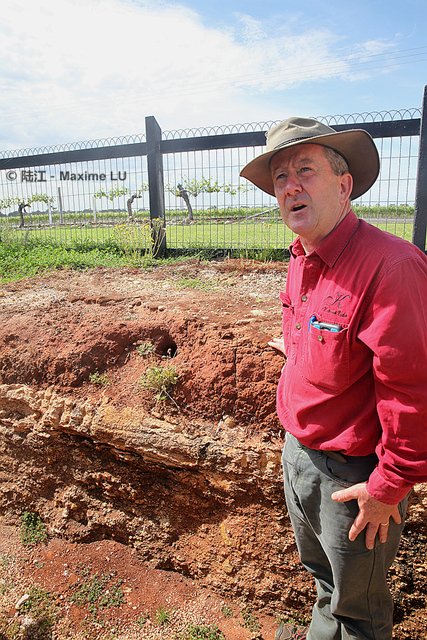
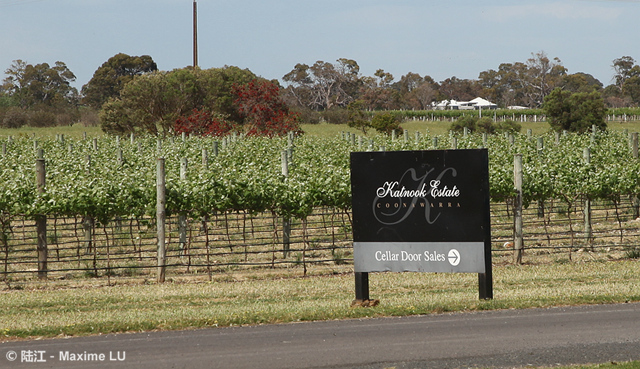
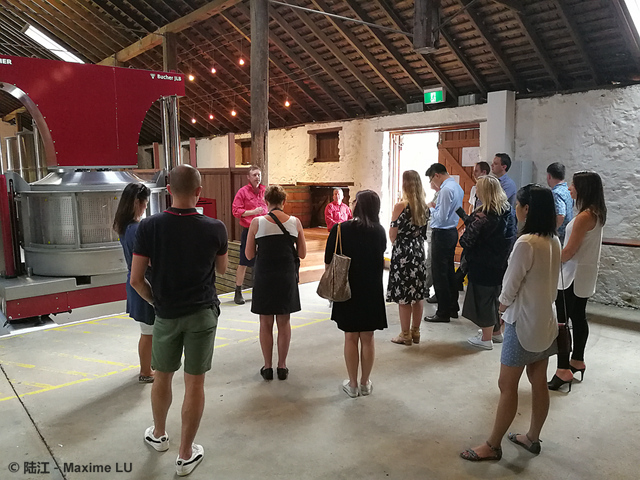
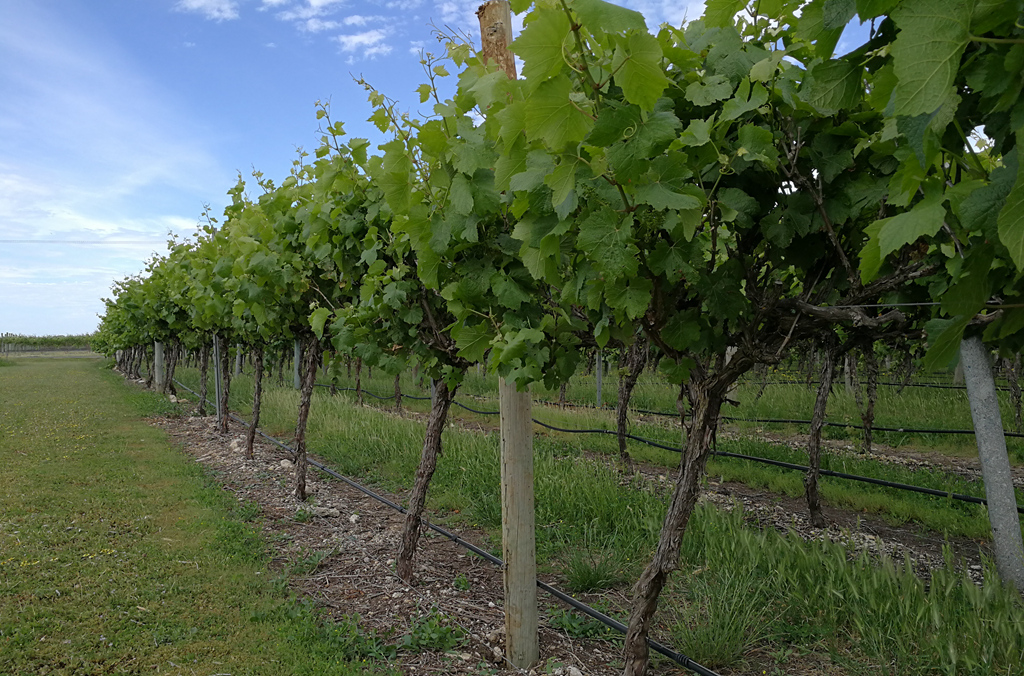
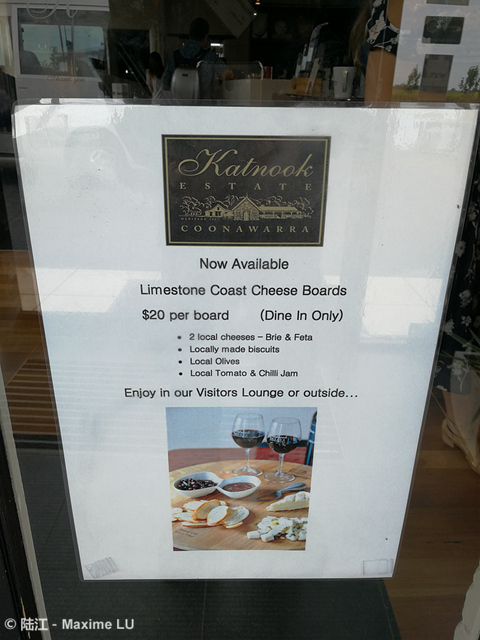
下了飞机,直奔当地标杆酒庄之一的Katnook,酒庄很早以前就在酒庄里专门掘出一小块地,切出土层剖面,加了围栏和图示,方便访客学习了解。庄主带我们在现场讲课,实地讲解当地典型的土壤结构。参观了Katnook的葡萄园,正好开花时节,预计明年三月采收。酒庄压榨机,酿酒师说,占地少,用力柔和,可以小批量操作。应该还有个原因价格相对气囊压榨机便宜。品鉴了长相思,雷司令,西拉,赤霞珠,酒庄旗舰酒Odyssey赤霞珠,细致有力,Classic风格,完整结构,实力不弱。Prodigy西拉,饱满强劲,厚实有力的单宁。

IMG_3800_副本

IMG_3811_副本

IMG_20161121_105151_副本

vineyardKatnook

IMG_20161121_102529_副本

IMG_20161121_102213_副本


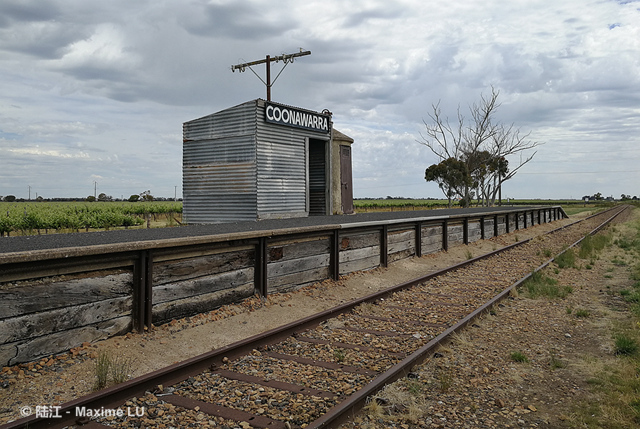
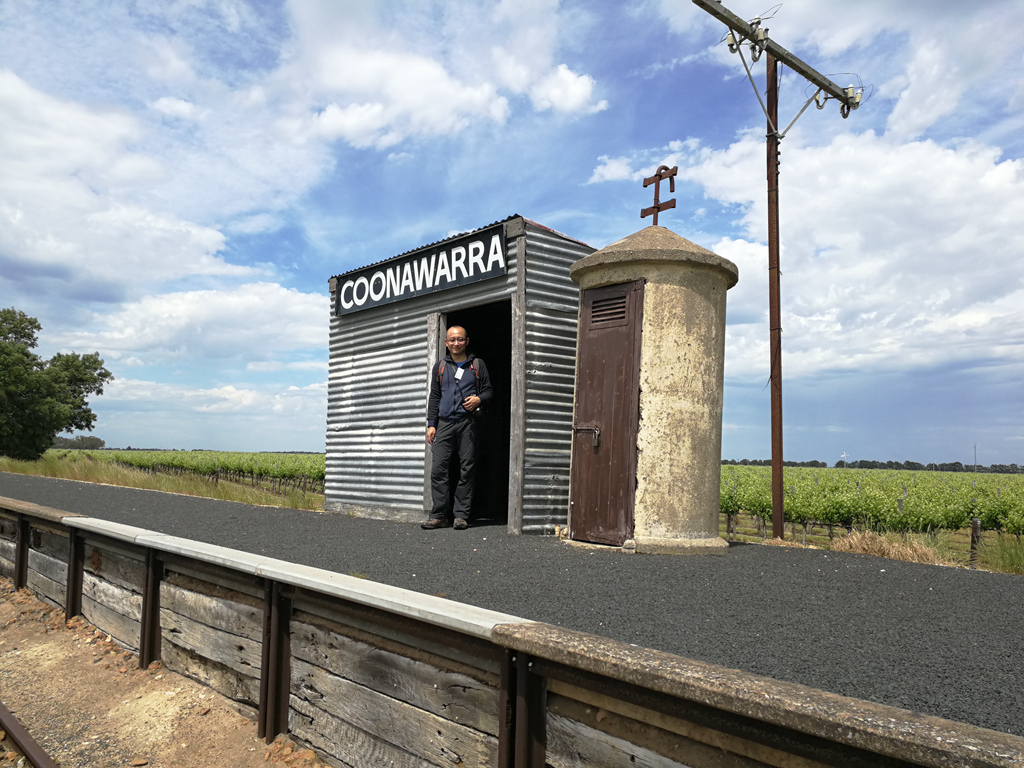
到了Coonawarra,有个最著名的地标,就是当地已废弃的火车站,说是火车站,说实话猛一看还以为是个厕所,仅能为数人挡风遮雨,不过后面大片葡萄园,还有延伸远方的铁轨,蛮适合来张文艺范儿的到此一游照。我也未能免俗,不过照得很不文艺。


IMG_20161121_111225_副本

IMG_20161121_111549_副本

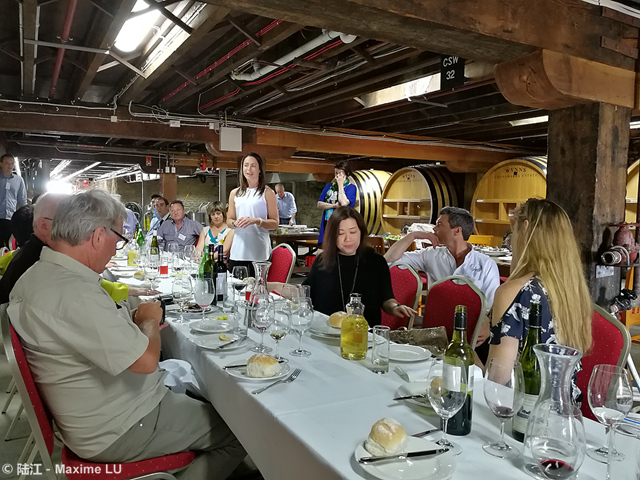
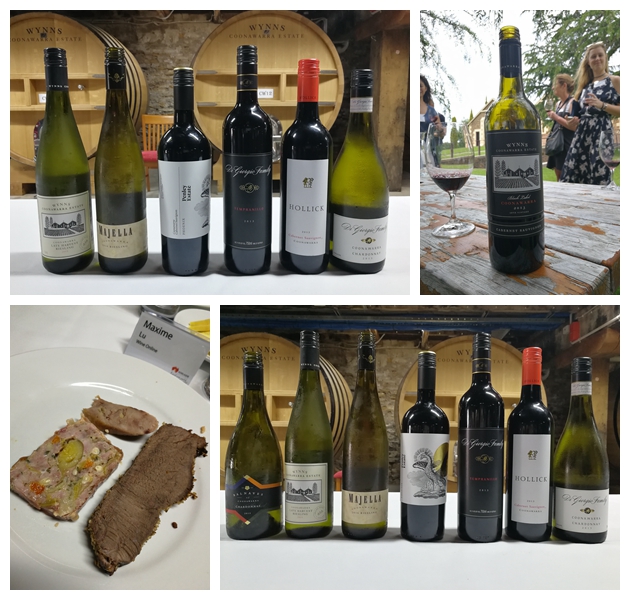
第二家也是当地标杆酒庄之一的Wynns酒庄,进中国市场比较早。 当地在Wynns酒庄安排了餐酒搭配的家常午餐,有Coonawarra的数家酒庄的酒,其中有在国内见过的Hollick等。说老实话,我还挺喜欢这样的家常简餐,适口,又能感受本地居民的日常吃食。

IMG_20161121_124627_副本

wynns

文字未完待续: 南澳葡萄酒之旅(中)- 克莱尔谷(Clare Valley)、巴洛萨谷Barossa Valley和伊顿谷(Eden Valley)


The DecanterChina interview: Pudao Wines

By

Eighteen months after being purchased by Australia’s Woolworths, Pudao Wines spoke exclusively to DecanterChina.com about its next steps forward.

Image: Marcus Ford at Decanter Asia Wine Awards judging week

The new investor

More than a year and half ago, the news broke that Pudao Wines, together with its sister firm Summergate, was purchased by Woolworths, one of Australia’s largest wine retailers.

Marcus Ford, general manager of Pudao, said the business ‘has benefitted greatly over the course of the past 18 months in establishing more sophisticated systems and processes.’

‘When Woolworth’s acquired Dan Murphy’s in Australia it too was a small retailer with a very few shops, [and] now it is the dominant wine retailer in the Australian market,’ said Ford, hinting at the retailer’s potential in Greater China.

The post-austerity period

As a fine wine retailer that initially put great emphasis on the corporate gifting sector, Pudao has had to adapt to a new reality.

‘Very few companies now use wine as a gift and those that do are more focused on value offerings than the super premiums of years gone by,’ said Ford.

Currently, most of Pudao’s consumers are buying wines at between 100 to 500RMB (£10-£50) per bottle. ‘Our customers are very open-minded about region and style.’

Amid general changes in the market, ‘we have continued to grow at a healthy and sustainable rate’, said Ford.

Try before you buy

For Pudao Wines, which owns an online store and two offline shops, ‘try before you buy’ is the key in promoting wines to Chinese consumers, said Ford.

The retailer therefore actively invites customers to try wines in their flagship stores in Shanghai and Beijing, and organises hundreds of tasting events, he said.

Offering a specialised service is also important, said Ford. ‘The majority of our staff came from a service background.’

Fake wine: ‘Not just a China problem’

Another concern that’s stopping Chinese consumers from buying wines is the risk of getting fake wines.

‘I would point out though that the fine wine market has problems globally and consumers need to be aware that this is not just a “China problem”,’ said Ford.

‘We work with established importers and have great relationships with many, we are 100% focused on sourcing from the best.’

China in the next 5 to 10 years

‘I think over the past 10 to 15 years the wine market in China has been through some very exciting and sometimes over-heated times,’ said Ford.

The next 5 to 10 years will see a ‘more stable market’ develop as consumers grow in confidence. A key element will be how domestic wines perform, and whether they can compete on quality and value against imported wines, said Ford.

He added that Pudao Wines ‘aims to open more stores over the coming years’, but won’t be rushed.

‘Imported wine is really only a decade old in the China market so whilst we are ambitious we are also in no hurry to open a huge network of stores.

‘In Hong Kong we have re-branded our business under the Langton’s banner (part of the Group) and we are very excited about our fine wine brokerage service that is now up and running there.’

Word of advice for people new to the wine business

‘Wine is a complex business with many layers- some wines are commodities, some are like fast moving consumer goods, some are boutique productions and some are like luxuries and collectibles.

‘You need to be very precise about understanding your customers, what they are looking for and how as a retailer you can add value to their experience.’

Translated by Sylvia Wu / 吴嘉溦
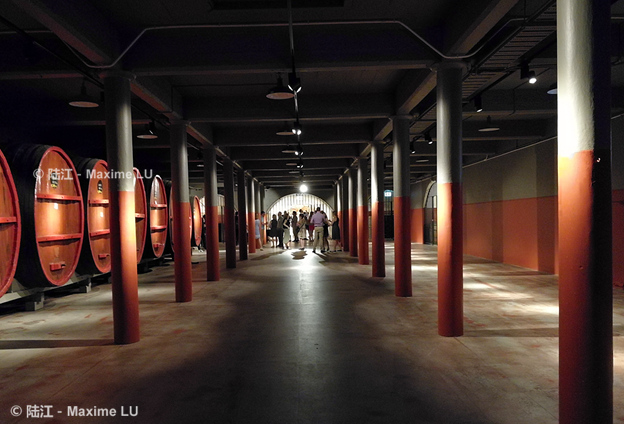
Interview on Winemaker of Aoyun, the most expensive Chinese Wine

Jiang LU (Maxime LU)


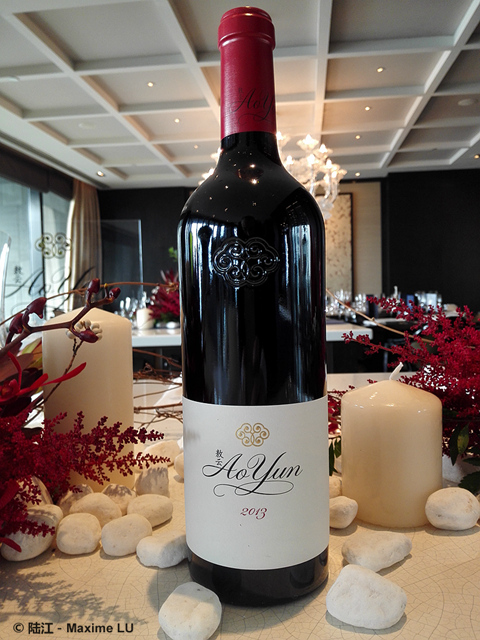
Speaking of the most expensive and most international wine now made in China, the first on the list should be Aoyun wine (AOYUN) produced in Yunnan Shangri-La by the world’s top luxury group LVMH. Many other domestic wines claimed to be the same,but we know they are just good at amusing themselves and access to only some special channels, even much more expensive than AOYUN.  While AOYUN is different,it has been tested by the consumers from London to New York fine wine market,approved by many international wine experts and specialists,accepted by the strongest wine merchants including BBR and Live-ex,and finally entered into Chinese market. Nonetheless,we have to admit its price is high(more than 2000RMB,300 euros around),that’s why it arouse so much controversy in domestic and international wine market.`

aoyun6


I have been following LVMH Aoyun winery since 2014. LVMH Group has always been a fine wine industry giant, owning such as Chateau Cheval Blanc、Chateau d’Yquem 、Domaine des Lambrays、Krug and many other super top wine brands. This time LVMH also plans to create a luxury boutique wine,which actually could benifit all Chinese wines by enhancing their international reputations。

aoyun9


Simple background information about Aoyun
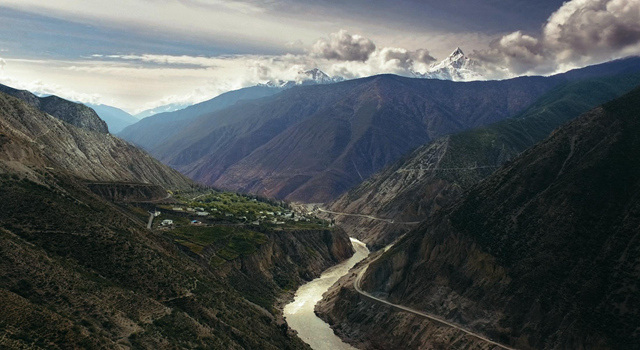
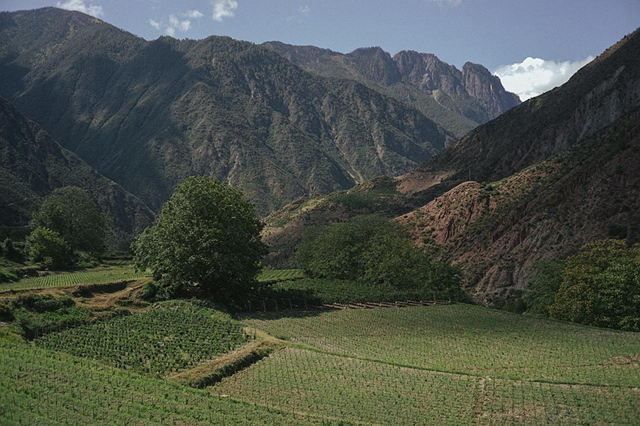
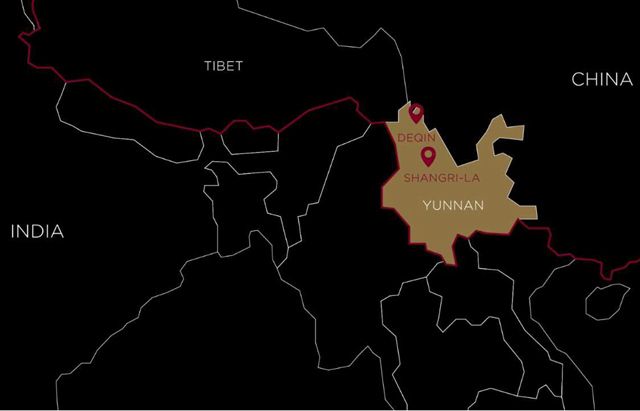
It took LVMH four years to find a perfect vineyard. Finally they chose the site in Shangri-La, near Meili Snow Mountain (6800 meters above sea level), and beside the Mekong River.
The daylight hours in the mountains is only 8-9,less than that is in Bordeaux。It results in a long growing season, giving enough time for phenols,acids and sugars to ripe. The flowering period in Bordeaux is generally 100-120 days, while in Aoyun vineyard it could be up to 140-160 days.

The pruning and managing work is all done by hand。Traffic is a disaster。The vineyard,with a total area of around 28 hectares,2200-2600m above sea levels,is distributed in four villages and divided into 320 little plots(one plot covers an area of 1.3 acres on average)。Every hector requires about 3500 hours of manpower to manage。People who work in the field are mainly local Tibetans who have their own cultures and habits。It’s very difficult to communicate with them。

aoyun5


As mentioned earlier, at present the way Aoyun priced its products remains controversial. I wouldn’t judge it, but leave it to the consumers. What I will do is to share with you my experience of a serious Aoyun tasting. Besides, it’s so lucky for me to get a chance to interview Maxence Dulou, the chief winemaker of the winery.

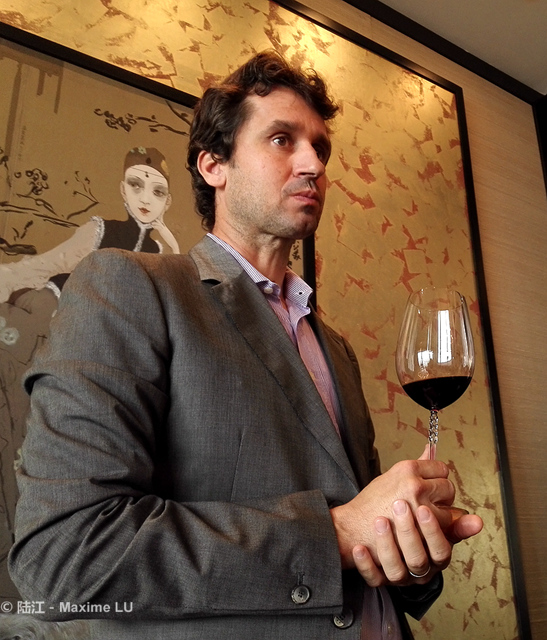
Chief winemaker Maxence Dulou,live in Yunnan and work with the team since 2012,now is in charge of all the viticultural and winemaking work.

aoyun1


What do you think of other wine regions in China?

I’ve been to Shandong, and Ningxia twice in the past two years, where I had many quality red wines and do feel its big improvement. Nonetheless each of them has their own problems. In Shandong, there is too much rain, the weather is so wet that the grapes cannot achieve desired maturity, but with some green flavor. It would be difficult to develop organic there. While Ningxia is always sunny, the grapes are able to accumulate enough sugar in the harvest season,but lack acidity,and their tannins cannot ripe enough. It is very cold in the winter, so grapes need to be buried to keep warm. But overall it seems fairly comforting.


In your opinion,what technologies can be used to make up for the inadequacy caused by the weather?

It is the same to all the regions that if there is a real dizaster, the winemaker could do nothing but learn to be strong. The weather varies considerably from June to August in Yunnan。But when it comes to the harvest season, generally from mid-September to the end of October, everyday is sunny and dry, and the grapes can achieve satisfying maturity.

This kind of cliamte is suitable for the implementation of organic management, so that’s what we do there: use Bordeaux mixture and yak manure only in the vineyard; try to minimize human intervention as possible as we can so that the grapes can gradually adapt themselves to the environment and be able to cope up with all the harsh weathers.

Currently we have only three years cultivation experience and four years operation experience there. We need much more time to master all the micro-climate changes discipline in the production area.


Your vineyard is 2000m high above sea level, thus sunlight would be very strong in the summer. Do you have any special vineyard management techniques (framing, pruning, etc.)?

We use VSP model, which keeps the leaves all through the growing season and cuts some in the veraison period. The leaves facing southwest will always be kept to protect grapes from strong sunlight. The climate varies every year, so pruning work must be done depending on conditions. For example, this June is cloudy, which means we don’t need to cut too much. Unlike France, thick clouds will weaken the sunlight but will not block it,nor have any impact on the growth of the grapes. It is because we are in such a high altitude. The clouds are sometimes only 100 meters above our heads(and sometimes even below us). Sunlight can always find a way to penetrate the clouds into the vineyard to ripen the grapes.

aoyun4

What are the plans for the future development of the winery?
We’ll make new technical attempts such as cultivate more grape varieties, improve the pruning and grass planting work, use Chinese pottery in the fermentation and so on.


It is said the Chinese pottery you just mentioned have been used in making 2013 vintage of Aoyun Wine. Does it work well?

We had 40 days maceration(including fermentation), and then moved into second fermentation ( malo-lactic fermentation). 40% new french oak is used at this stage. The rest used old barrels as we normally do. But it is impossible for us to bring in barrels from France due to the inconvenient transportation. Nor could we purchase any old ones from nearby production areas, as different yeast may carry bad bacteria and cause contamination. Thus we chose to use a nuetral container, which could not add any floavor to the wine but will not add any bad effect either. The pottery was by far a satisfying choice. They are brand new,and use to hold local spirits.


Does Auyun use manual irrigation?

In California and Australia,the grape roots are bout 50cm long, people use drip irrigation, which means, you give grapes the exact amount what it needs. But drip irrigation will make the surface soil too hard. While in Ao Yun, the grape roots are up to 3 meters, so they can absorb more water from soil and need no irrigation. Natural rainfall is enough for them. In dry winter, we do small range of flood irrigation from time to time. In this way, we can both offer waters to the vine and avoid soil hardening.


3 meters’ roots? I thought Ao yun had only young vines? How do you control the quality of the grapes? (By Lu Jiang)

We call five or six years old vines young vines. But vines used to make this bottle are already 15 years old. There are many local farmers who planted grapes in this area far before we purchase the estate. At the first two years, we did a lot of research and finally planted some grapes in the last year (2015). These baby vines need time to produce qualified grapes for wine. However, the wine in front of us is made by grapes from 15 years old vine with 3 meters’ roots. 15 years old vine took half of the area of our current vineyard.

In the past, farmers sell grapes to the winery by weight. So you can imagine, the only thing they care about is yields. After we came, we tell the villagers how to work through an interpreter, stay in complete control of quality and rationalize ourselves. We did a lot work here, for example we introduced rootstock grafting. Fisrt, this can improve grape quality. Second, it can prevent Phylloxera——no signs of it now, but once it occurs,it would be a disaster. We analyze the composition and structure of the soil and chose the most suitable rootstock. If the rootstocks do improve the quality, we’ll replant all the old vines.


So actually you have studied the vineyards since long ago?
Yes,we started to plant grapes in 2015,but begun to communicate with local government since 2012,and have been studying the field since 2008,8 years ago.

aoyun3


Currently how many varieties are planted in the vineyards?
Mainly Cabernet Sauvignon, Cabernet Franc, Merlot,Petit Verdot and some tested verities. Besides that, we planned to try Shira and Malbec, but stays undecided.

Does Domaine Chandon Ningxia purchase from COFCO Corporation Grape Seedling Base too?( By Lu Jiang)

yes!


How do you determine the time for Aoyun to come into the market officailly?
Its quality has been repeatedly confirmed that it can meet our strict requirements. Its performance is always stable. It is widely praised by all the international heavyweights in wine industry whom we sent the wine to. They all recognize it as a unique and great Cab, and the best wine in China. At this point, we thought we are ready to bring it to the market.


Could you describe Aoyun from your point of view?

It’s the new interpretation of Cabernet Sauvignon. Deep color, with both fresh fruit and ripe fruit characteristics. Freshness and lively acidity is from the unique terroir. Many people would think of Pauillac the first time they smell it,with similar aroma like cigar, tabacco and cedar. While someone find it more like California wines, very fruity, delicious, full-bodied. For me it’s somewhere in between. The tannin is as elegant and structured as I expected. In a word, we don’t want to cater to a growing demand fo strong wines, but a sophisticated and graceful wine, the wine that can represent the sacred mountain and its terroir.

aoyun8

aoyun7

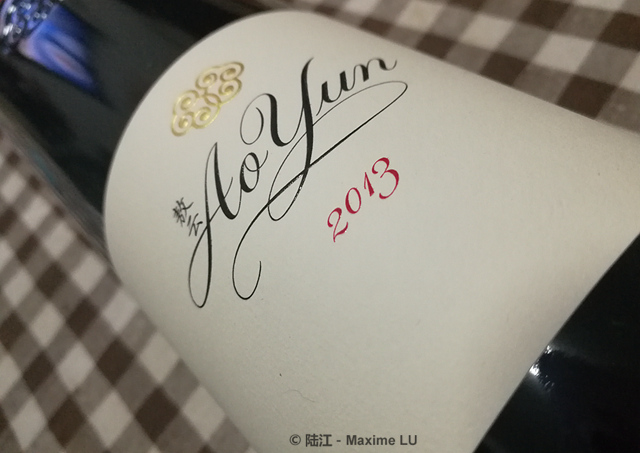
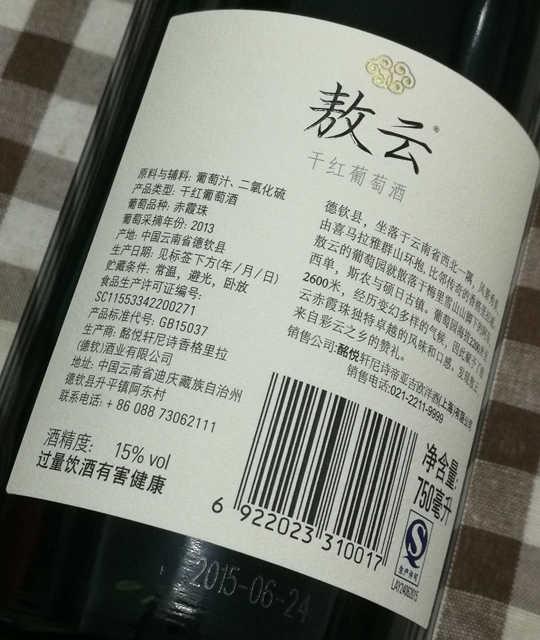
AOYUN 2013  Tasting note (By Maxime LU)

Intense with ripe black fruit flavors, violets and western spices, revealing a trace of smoke and dark chocolate. Full-bodied and crisp, fruity-forward, with strong and converged tannins and delicate texture. Balanced, in the last part you can feel it slight alcoholic. Tobacco and spices can be found in the long finish, Alc.=15%, Ph=3.55

You can still tell that it’s from new world, but indeed elegant. I must say it’s good. As for the price, you can listen to either LVMH ( because of the high cost, more than Chateau Cheval Blanc and Chateau D’yquem) or some critics(almost as expensive as Chateau Cheval Blanc and Opus one, so unreasonable), or just keep quiet, wait and see how it will behave in the market.

Maxime LU