Text: By Maxime Lu / 陆江
Published on ProwineChina.COM, Chinese version of PROWEIN.
In recent years, the Chinese wine market has witnessed dramatic changes, with transformative adjustments made in both major consumer groups and the sales model of wine merchants.
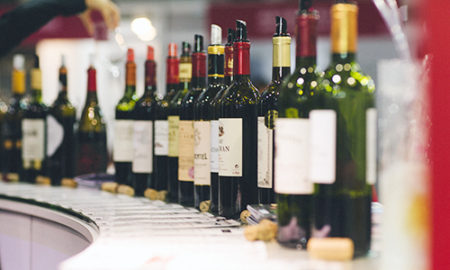
The spending spree emerging in China in 2006-2007 culminated in early 2011 and then subsided. With the introduction of the policy for tightening spending on official overseas visits, official vehicles, and official hospitality in 2012, the country’s wine market rapidly entered the period of adjustment. Major consumer groups have changed from enterprises, institutions and government authorities to the public. Following the slump and stagnation in 2012-2014, the Chinese wine market bounced back in 2015.
Take imported wine as an example. In 2015, the volume of imported wine totaled 550 million liters, a 44.58% y-o-y increase, valued at US$ 2,039 million, a 34.30% y-o-y increase. Nonetheless, we should be cautiously optimistic about the high percentages. It should be reminded that the market was rather sluggish in the previous two years. Moreover, we should consider the following factors: replenishment following the clearing of stocks in the distribution area, purchase following the introduction of new capital, and of course market growth.
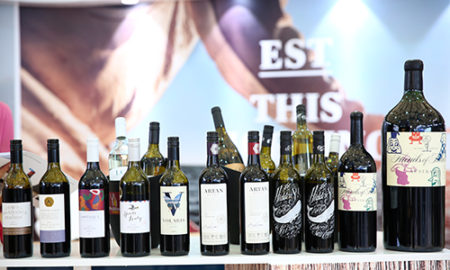
Regarding origin countries of imported original wines in 2015, France ranked No.1. The volume of wines imported from the country totaled 167 million liters, an increase of 33.66%, valued at US$867 million, an increase of 41.25%. The average price was US$5.19/liter, increasing by 5.68% over the previous year. French wines accounted for 46.2% of China’s imported original wine market, still occupying a solid position. Australia ranked No.2. Thanks to lowered tariffs, the volume of wines imported from the country surged by 56.54%, with the import value soaring by 77.80%. Australian wines accounted for 23.4% of China’s imported original wine market. Chile gained a market share of 9.1%, ranking the third place in the list. Countries ranking No.4 to No. 10 are Spain, Italy, the United States, South Africa, Argentina, New Zealand and Germany.
With a market share of nearly 70% (in volume), domestic wines remained to be a leading player in the Chinese wine market in 2015. Changyu and GREAT WALL monopolized the domestic wine segment. Facing foreign competitors and increasingly mature consumers, leading domestic wineries doubled efforts to adjust the pricing system of their product lines, and further improved low price product lines with the highest sales volume in the mainstream market. In addition, these wineries purchased overseas wine chateaus and established cooperative relations with renowned international brands in a bid to enter the imported wine market, fully reflecting their ambition and vision for the future market. These wineries are expected to have more market moves in 2016. In another development, domestic wine markets in Beijing, Shanghai and Guangzhou were severely hit in 2015. In wine markets in a number of tier-3 and tier-4 cities, nevertheless, domestic wines with wide brand influence and strong market operational capability will maintain a leading role over a certain period of time in spite of mounting challenges.
It should be mentioned that, in recent years, quite a few fine wine chateaus were founded in wine regions such as Ningxia, Xinjiang, Shanxi and Huailai. Wines made there were well reputed in domestic and international markets. These fine wine chateaus have boosted local consumers’ confidence in domestic wines and increased their knowledge and understanding of domestic wine regions. More and more big importers began to act as an agent of domestic fine wines. Market feedback shows that more industry resources will be utilized to promote Chinese wines in 2016.
As for market expansion and sales activities, the entire industry continued exploration efforts.
B to C platforms, such as JD and Amazon, gave more support to direct-selling categories and merchants trading on the platforms so as to increase the conversion rate. These platforms have always been focusing on individual consumers, so they were not hit by the policy for tightening spending on official overseas visits, official vehicles, and official hospitality. Instead, these platforms developed swiftly along with the growth of the consumer market. According to sources from JD, the company’s revenue of wines in 2015 tripled from that in 2014, and the figure in January 2016 quadrupled from the same period of last year. Since the beginning of 2016, these leading platforms have been planning to enhance market expansion in tier-2, tier-3 and tier-4 cities and towns. They are gradually becoming the core platform of the wine market.
Once a hotspot in the capital market, vertical e-businesses have suffered from mounting pressure in operation. In the past one or two years, some of these e-businesses were acquired or merged, some began to sell multiple categories, and others faded away. Currently, the O to O mode in the wine industry is increasingly becoming a highlight in the capital market. By leveraging capital and the O to O mode, some wine merchants, such as jiuxian.com, 9bianli.com and 1919.cn, have realized rapid expansion. But both suppliers and salespeople consider such a mode and expansion controversial. However, for several leading O to O wine merchants, they will experience rapid expansion in 2016, with both bubbles and opportunities.
Meanwhile, the B to B mode has also taken shape in China’s wine industry. More and more e-businesses dealing wines have adopted the mode, such as wajiu.com and jiuxian.com.
As for long-established wine merchants, they have been exploring new business models while continuing to develop traditional channels including restaurants, shopping malls and supermarkets. For instance, Pudao, the Chinese subsidiary of Australian retail giant Woolworths, is exploring the mode of wine boutiques to provide private customers with cost-effective fine wines and professional wine service. ASC has closed its expensive clubs providing services for private customers. The company has been increasing investment into e-commerce, enhancing cooperation with other e-commerce platforms, and lowering its profit margin and product prices. Aussino World Wines, ASC and other wine merchants are launching wine education and cultural promotion campaigns to improve customer affinity. These traditional wine merchants will continue transformation in 2016.
Regarding the overall development of the Chinese wine market in 2016, representative wineries gave basically positive feedback. They expected an increase rate of 15%-30%. We are looking forward to the new year with modest growth.
Source link: http://prowinechina.com/channels/138.html